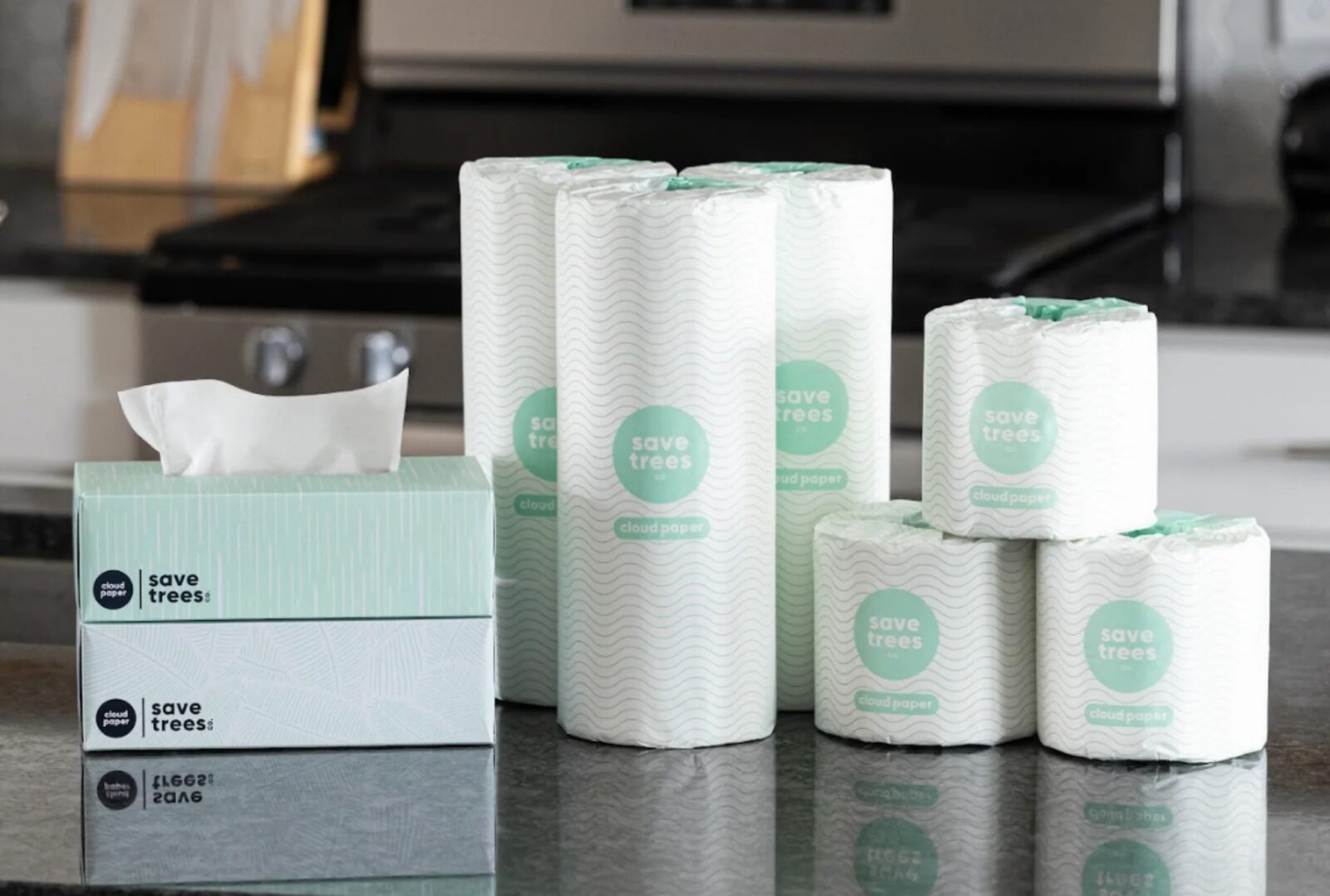

Adhesives used in the production of paper towels and toilet paper
When you think of products that are manufactured with the help of adhesives, the last thing that will come to your mind will be their use in the production of toilet paper, paper napkins or towels. However, adhesives are very important for hygiene products. At each stage of manufacturing these products, adhesives are applied in a variety of operations, such as:
- Winding the paper on the cardboard tubes (cores). The adhesive is used to fasten the cardboard sheets, and make an oval core by gluing. As a result, we get a cardboard tube, on which toilet paper or towels are wound on later, forming rolls.
- Fastening (laminating) several layers of paper. In the process of making two- and three-layer paper towels or paper products, the layers must be glued together to get a one-piece cellulose tape.
- Attaching the end of laminated paper to a cardboard tube. The adhesive applied to the cardboard tube fastens the first sheet of a roll of hygienic products.
- Sealing the last sheet in a roll. The adhesive is necessary to fasten the outermost sheet of toilet paper or towel to the previous sheet. The roll is torn open directly before use.
- Boxing up products. In this case, the adhesive is used to seal the covers of cardboard boxes, with packed rolls placed inside.

Trends in the paper napkins and towels’ market
In recent years, global demand for the paper products of this kind has been unprecedented, as these products have experienced unpredictable growth trends during and after COVID-19. This trend had resulted in several subtrends, including focusing on the efficiency of equipment. With high demand, it is important to make the most of the available resources and equipment, while studying and taking on the obligation to purchase extra innovative equipment. As a result, many manufacturers had been looking for raw materials that reduced downtime, cut down the number of defective products, and boosted the output rate.
Currently, the market continues focusing on premium offers based on consumer preferences. The new demand for high-quality hygienic products has resulted in an increase in premium components for the manufacture of paper products, such as new packaging solutions, innovations in the basic materials and the use of adhesive instead of mechanical lamination.
Besides, an increasing number of consumers of ready-made products are going to pay for environmentally friendly products and brands with certain characteristics. Therefore, brands seek to meet the changing consumer preferences, and look for new, alternative raw materials.
There is a growing market interest in alternative fibers that can be obtained in a sustainable way for the manufacture of paper napkins and towels. Manufacturers are ready to use materials that do not have primary wood in its composition. The emergence of new types of raw materials and substrates means that manufacturers need to find adhesive components suitable for gluing new materials, with the maximum productivity maintained. Great attention is paid to reducing non-recycled plastic in product packaging. The industry is looking for components that support bio-based or compostable methods.
As a manufacturer of paper sanitary and hygienic products or brand owner, you should make sure that your paper napkins and towels meet market trends for safe and efficient recycling solutions, while maintaining low costs and high productivity. Therefore, we recommend using an adhesive that provides:
- Overall efficiency of the entire production process.
- Necessary adhesion during the production process to cut down the downtime and eliminate quality problems.
- Moderate stickiness of the adhesive, which will ensure the ability to easily separate a napkin from the core and tail of the roll during use.

LUX-X is ready to help with adhesive solutions to support manufacturers’ initiatives in the effective use of equipment, and suggests using innovative adhesive products that meet these trends.
Adhesives for paper napkins and towels are necessary for your products to meet high quality standards.
Softness, durability and good absorbency are the basic properties that consumers need when using paper hygiene products. However, customers have different expectations for each type of paper product, depending on the application, such as face wipes, hand towels or toilet paper. Brand owners have to meet these needs and supply products in a highly competitive market. In order to respond to competitive pressure in the industry, manufacturers are looking for solutions to improve the efficiency of their production lines. This means that you need a reliable and innovative adhesive’s supplier who will help you manufacture high-quality paper products.
Each production operation – gluing the first and last sheet of a paper roll, laminating or winding the paper on the core – has different requirements for adhesives. Regardless of the degree of softness of the paper roll you require, the number of layers of toilet paper or kitchen towels, we have an adhesive solution that will suit you best.
What requirements should adhesives for hygiene products meet?
first of all, it is safety during use when contacting the skin and mucous membranes;
- environmental friendliness, efficiency and cost-effectiveness;
- the integrity of the product maintained under the influence of moisture;
- stability to temperature fluctuations;
- short setting time;
- clean performance;
- good adhesion regardless of the layer;
- the adhesive must be supplied ready for use.
Properties and characteristics of adhesives for paper towels and toilet paper
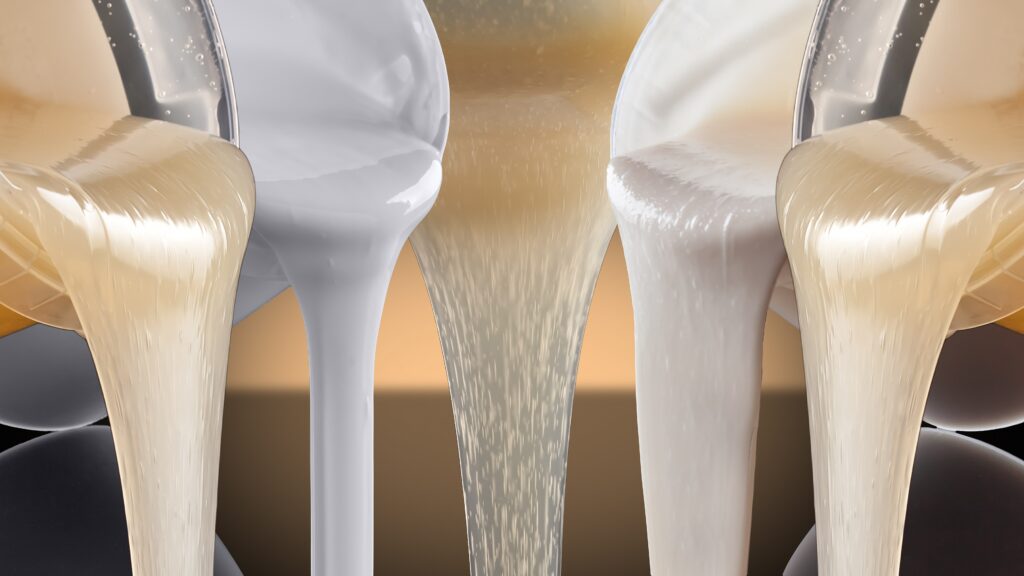
Water-based adhesives are used in the manufacture of hygienic products.
When manufacturing paper towels, napkins, and so on, this adhesive is used, in particular, to fasten the first sheet, for tightening up the tail, laminating, assembling tubes and cores. Adhesives consist of a mixture of polymers dispersed or dissolved in water, with other components added such as plasticizers and fillers. These adhesives do not contain solvents, which reduces the impact on the environment and provides low-temperature application to reduce energy consumption. Besides, such adhesives boast excellent adhesion properties and are suitable for high production line speeds.
Why is the choice of adhesive for hygiene products so crucial? At first, it may seem unimportant, but the technology we present is not just about a water-based adhesive. Properly selected additives and polymers added to the formula significantly improve the operational features, performance and overall quality of the product. This provides an uninterrupted operation of the enterprise and improved customer satisfaction.

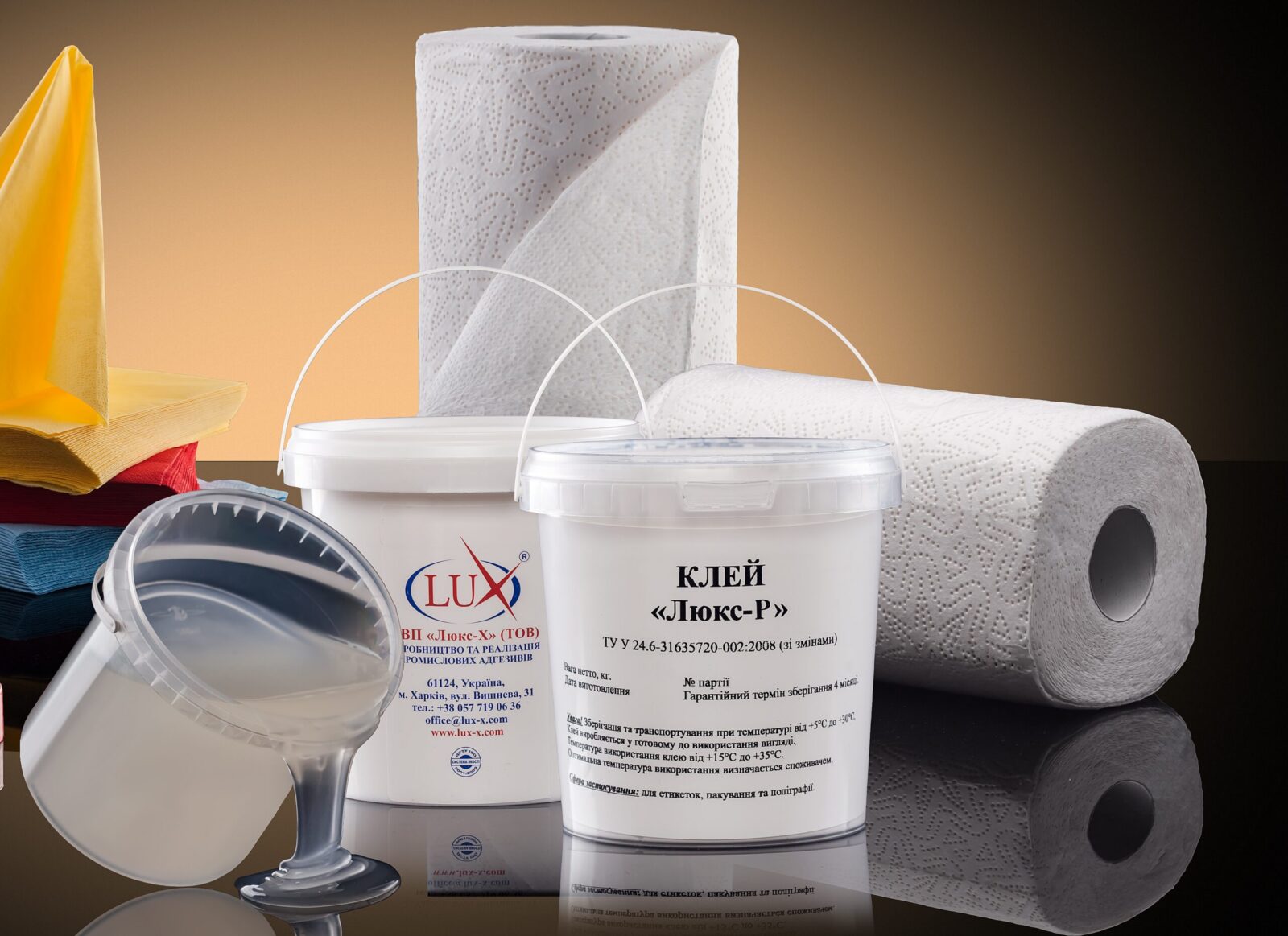
LUX TM adhesives used in the manufacture of paper towels and toilet paper
For the end user of hygiene products, high quality means being skin-friendly, durable and safe. Our adhesives allow these products’ manufacturers to produce toilet and cosmetic wipes, meeting all the requirements for hygiene products’ adhesives. We manufacture high-quality adhesive products to be applied in the areas as follows:
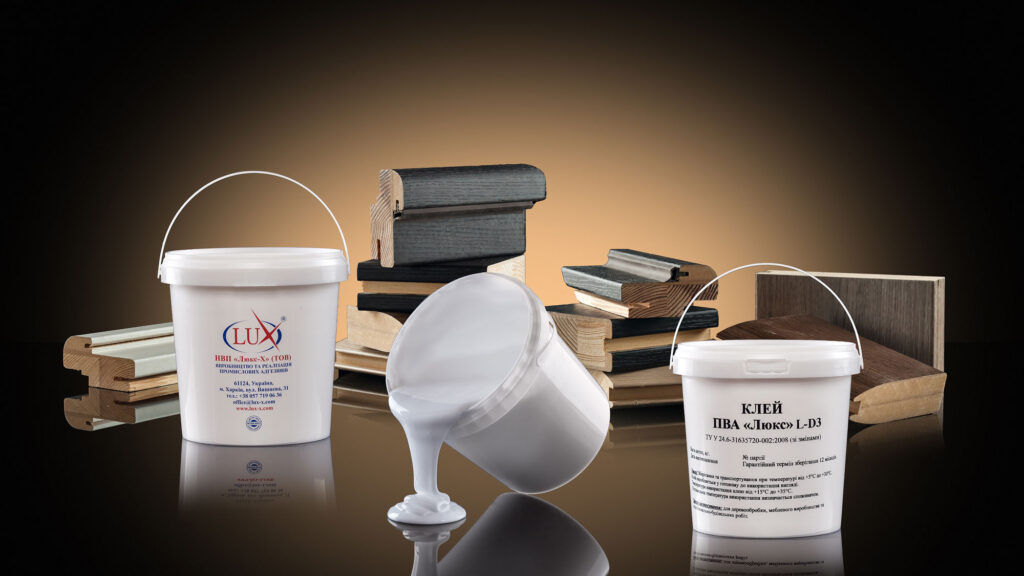
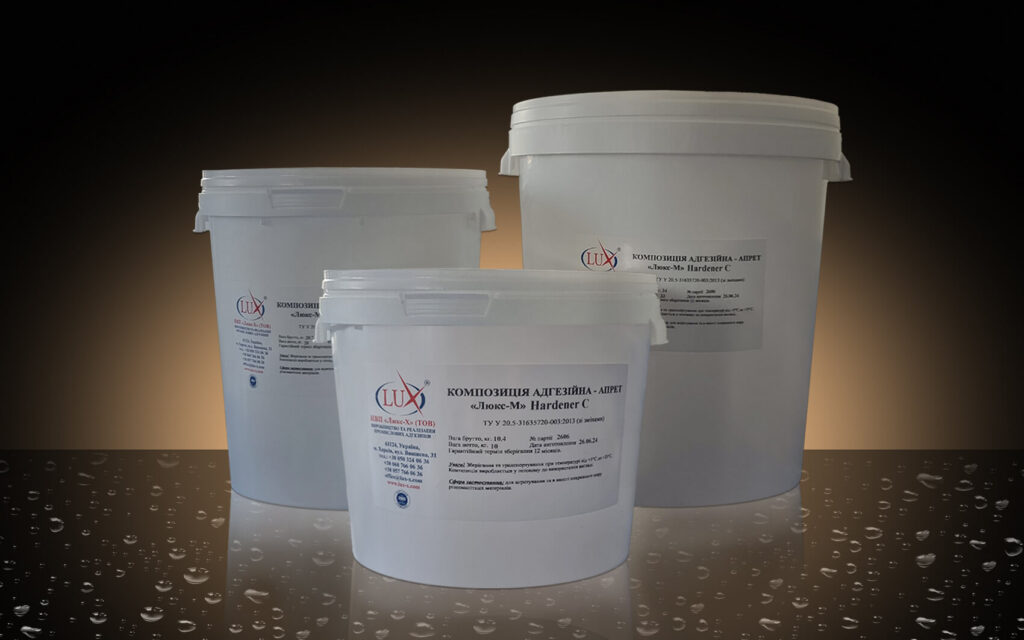
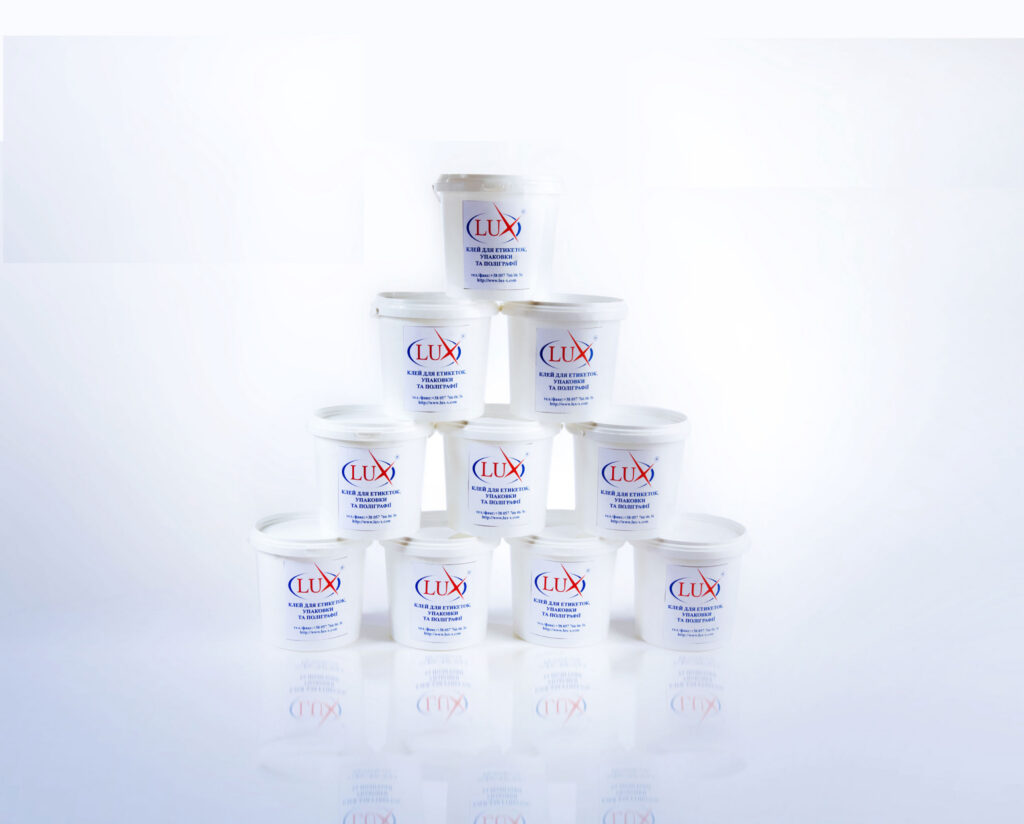
- Winding the paper on cardboard tubes (cores). LUX ECO adhesives used during the winding of the paper on a tube allow to make cores of various density, hard or soft, with the paper cylinder remaining durable. These modified water-soluble adhesives are made on the basis of polymers (of natural and synthetic origin), polymerization enhancers, fillers, thickeners, preservatives and stabilizers. LUX ECO is an environmentally friendly adhesive consisting of safe ingredients only, therefore it may be used in the manufacture of packaging for food products, hygiene products and goods for children. We recommend using adhesives of the following brands: Lux-R ECO-25; ECO-26D; ECO-34D or ECO-40D.
- Fastening (laminating) layers of paper. Modified water-soluble polymer-based adhesive Lux-R V-18B is intended for laminating paper in the production of multi-layer rolled materials, paper napkins and towels. It is used in the manufacture of multi-layer hygienic products, being applied with the help of disc or roller type equipment. The adhesive, adapted to the customer needs for fast setting time and clean operation, provides soft and transparent film. V-18B adhesive provides excellent adhesion for 2-4 layers of paper products.
- Fastening the first and last sheet in a paper roll. Fastening the end of the paper to the paper tube must ensure a reliable gluing with the minimum consumption of adhesive. Sealing the last sheet in a paper roll is crucial, since it creates a visible image of the quality of the finished product. For these purposes, we recommend using LUX-R R-3B cellulose-based adhesive with stabilizing and preserving additives. It is designed specifically for fastening the edges of toilet paper sheets, disposable towels and other multi-layer rolled materials.
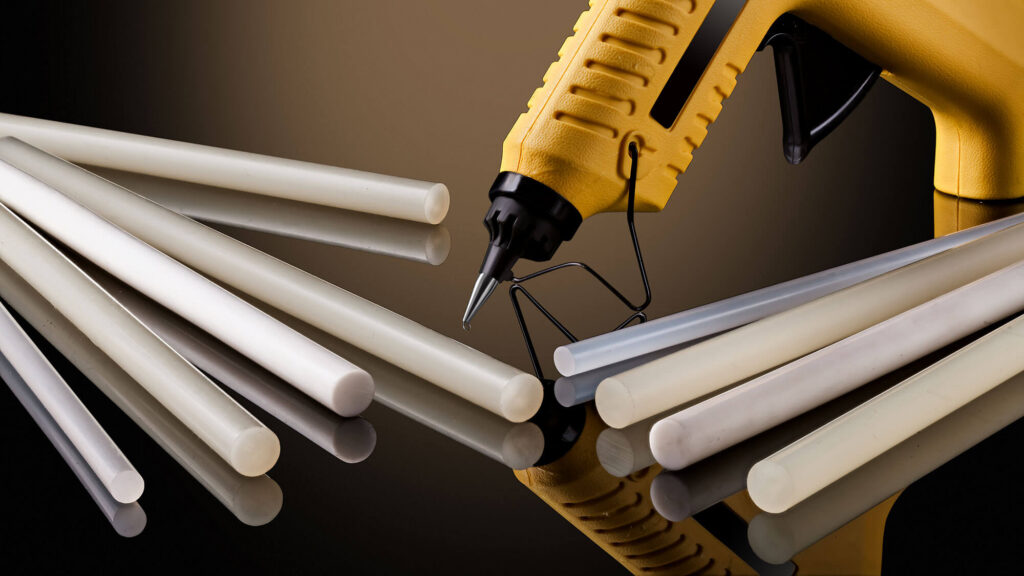
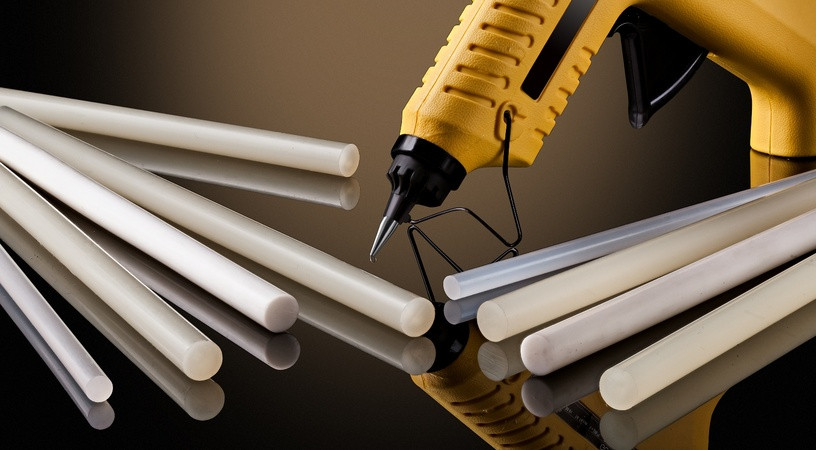
- Boxing up products. Depending on the type of equipment set up at your production facility, hot-melt adhesives for packaging produced by Beardow Adams TM (Great Britain) or water-soluble adhesives based on LUX TM polymers may be used for this purpose. These adhesives for packaging will provide not only reliable fastening of the valves of cardboard packaging with hygiene products, but also clean application, stability in relation to temperature fluctuations, high fixation rate, and guarantee eco-friendliness.
Buy the adhesive for toilet paper and paper napkins
Research and Production Enterprise LUX-X LLC, the leader among the Ukrainian manufacturers of industrial adhesives, offers reliable adhesives, and free advice on choosing a product and setting up adhesive equipment at your enterprise. To order the adhesive you require, please contact us via the feedback form or by calling the phone numbers listed on our website.