
How to use a hot glue gun
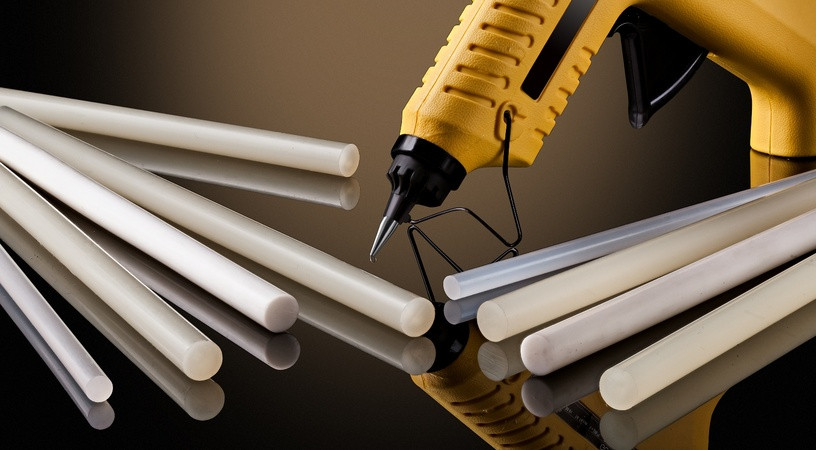
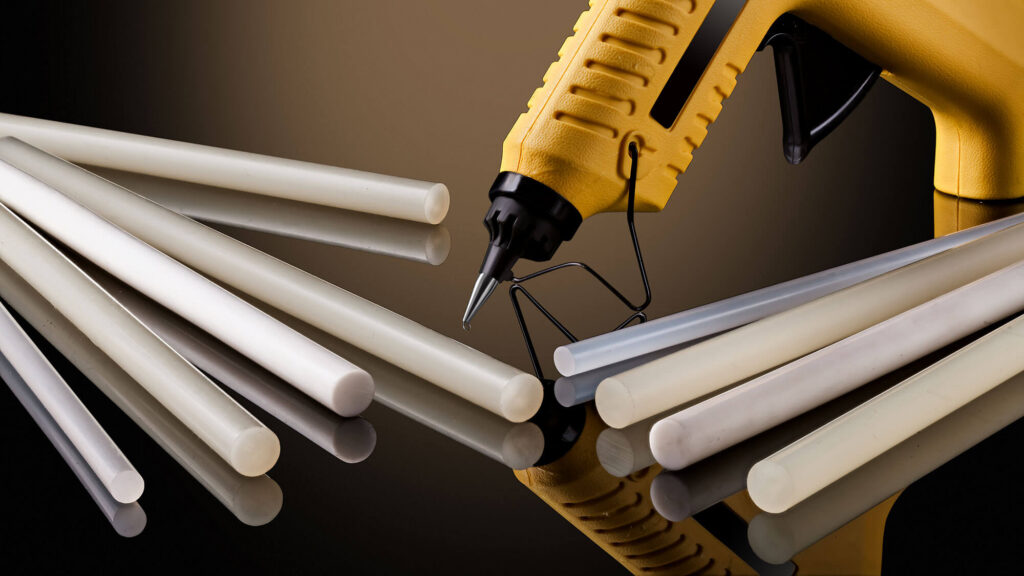
The hot glue gun is a tool used for gluing parts with the help of hot melt glue sticks. The hand-held hot glue gun softens the glue, doses it and applies onto a surface. Such a tool is simple and convenient to use. It helps assemble parts neatly, and without substantial financial and operational expenditures. The hot glue gun is a multipurpose tool that can glue many materials: paper, cardboard, textiles, rubber, plastics and other surfaces. The tool is used widely at the home, by artisans and in industry.
Advantages of a hot glue gun
- Fast gluing of parts.
- Hot melt glue durably and steadfastly bonds article components. The appearance of an article is neat, without excess glue traces and spots. Glue sticks are made both colourless and of different colours so that a suitable tone colour can always be chosen.
- Hot melt glue is used for assembly work when mechanical action is not used.
- Environmental-friendly and safe. Glue sticks have no components hazardous for health of humans and pets.
- The hot glue gun is easy to use.

Principle of operation of a hot glue gun
The principle of operation of the gun is simple. The hot glue gun has a special chamber that holds the hot melt glue sticks. In this chamber, the glue is heated with a heating element built into the housing. Squeezing the trigger makes the melted hot glue flow out of the nozzle to a surface. Some models are fitted with a mechanism for electronic temperature control and have several heating control modes. Automatic hot glue guns have a solenoid-actuated valve that replaces the trigger function.
What hot glue gun to choose?
Depending on the application purposes and tasks, hot glue guns are classified as professional ones used in industrial production and household ones.
Household hot glue guns are electric mains-powered and storage battery-powered tools. Mains-powered guns are most popular among décor master hands because the gun size is small, mains-powered and capable of keeping a temperature up to 20 minutes after being switched off. Storage battery-powered guns are heavier but no power cord makes working with the gun easier.

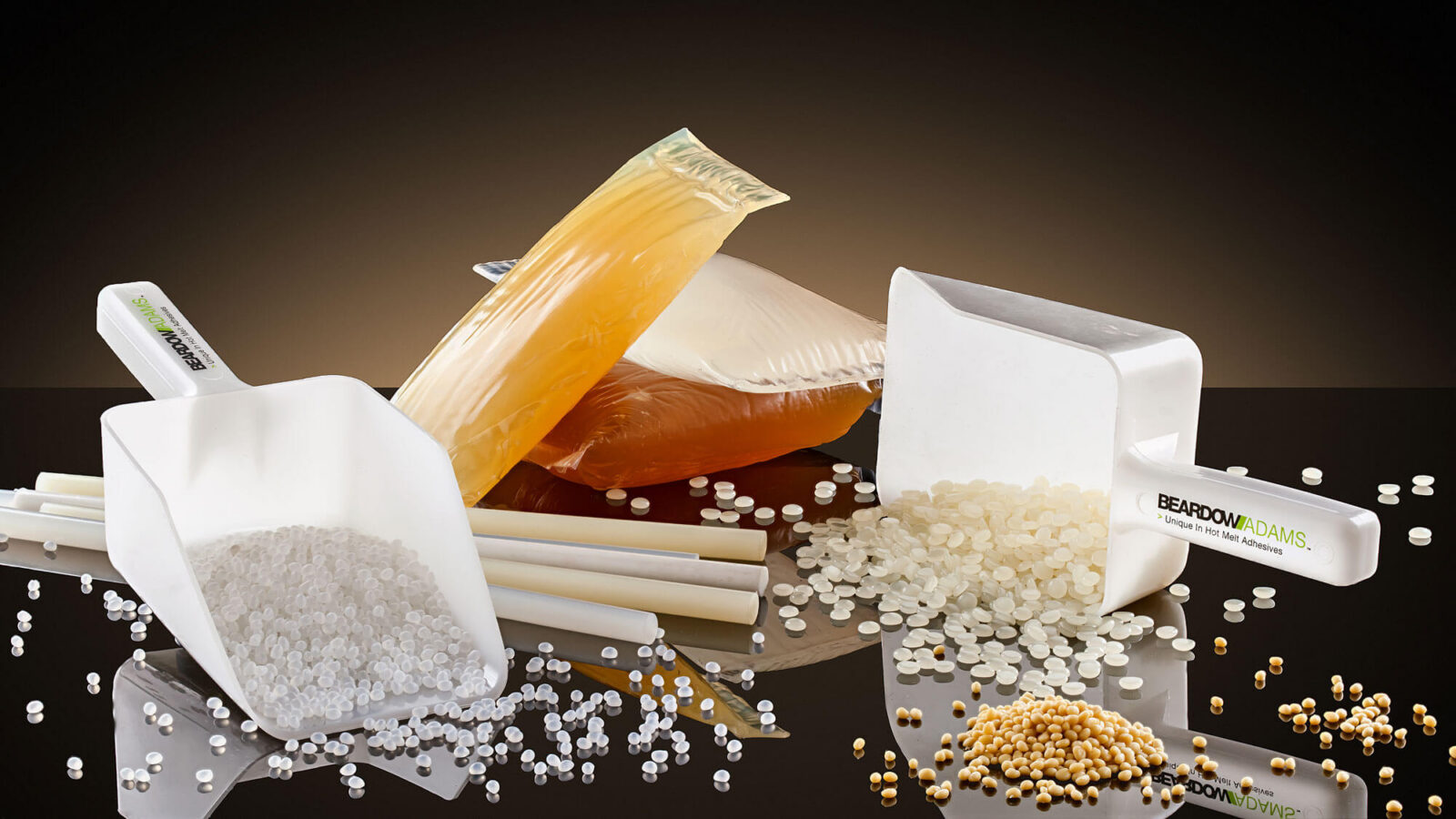
Professional industrial models are air-operated hot glue guns. The device has a powerful heating chamber with a sensor for automatic heating. Such guns differ from household ones by bigger sizes. The glue is applied onto a surface by spraying and the hot glue gun can be fitted with additional replaceable nozzles for applying a thin stream of glue. Professional models are adapted for special conveyor lines. This group of equipment comprises devices that function continuously. The tool is fitted with a temperature controller to choose precisely the characteristics required to work with a specific material.
When choosing a hot glue gun it is worth paying attention to the following technical characteristics:
- Glue stick diameter and length. The length plays no special role when choosing a gun because this is more about ease of use. The longer the hot melt glue stick, the less times a new one needs to be inserted.
- Heating temperature. A feature of hot glue guns is their different heating temperature. It depends on the glue variety being used. For the majority of hot melt glue sticks, the bonding temperature is the same: 160–190 °С. Powerful industrial hot glue guns can be heated up to 200 °С. This in no way affects the adhesive characteristics of the sticks – they will simply melt faster.
- Hot glue gun speed of operation and power. On average, the glue consumption rate per minute is 5 to 30 grams of liquid glue mass. In household conditions, a 10 gram per minute consumption rate is sufficient. If required to work with a bigger surface area, a more powerful gun is needed.
- The external parameters (housing, trigger). For ease of working, a gun with a plastic housing is used most often because such models are easier to handle.
- Gun nozzle. In simple models, one nozzle is attached. More advanced types of hot glue guns are provided with several attachment nozzles to facilitate the performance of different kinds of jobs.
- Additional characteristics (a display, a stick feeder window, a stand) – these are additional elements of the hot glue gun that make working with the tool convenient.

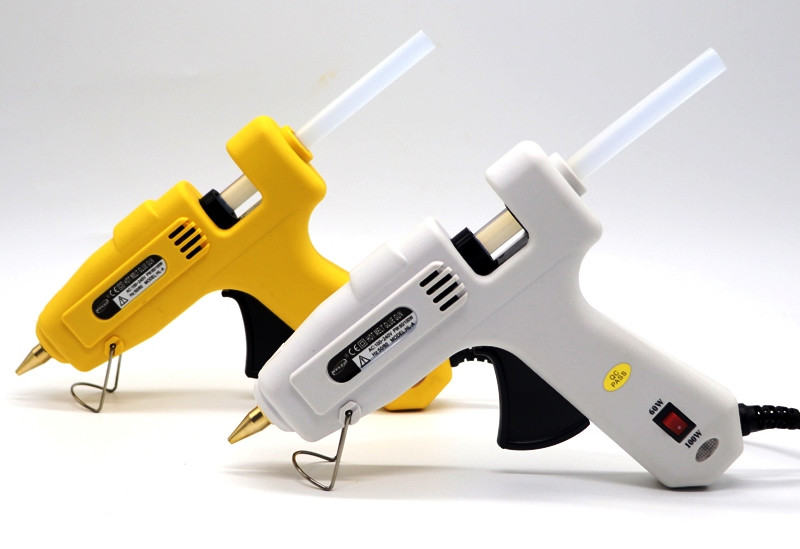
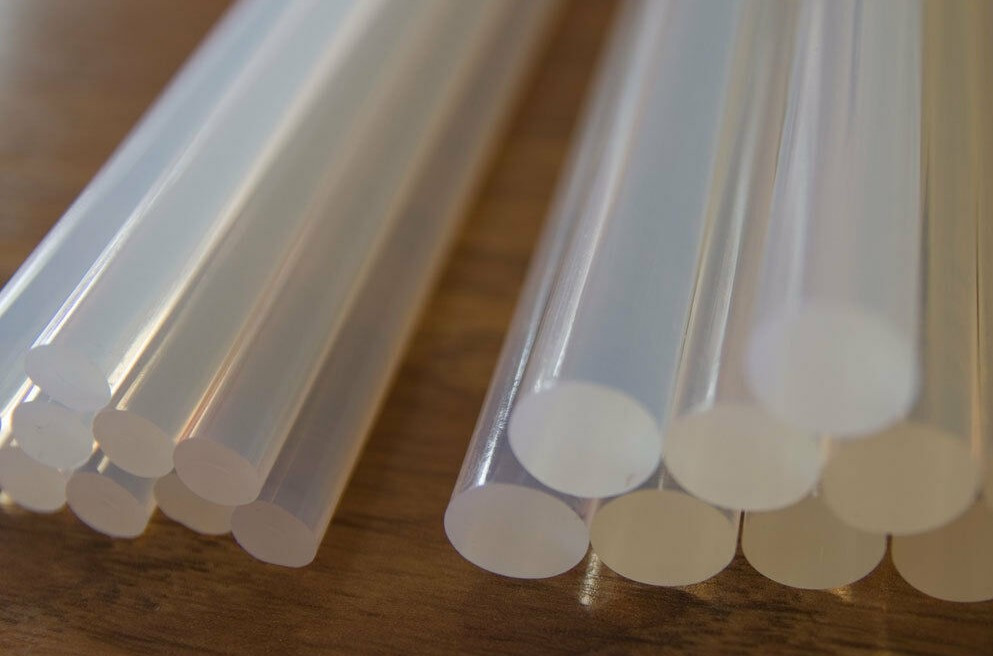
How to apply hot melt glue in the form of sticks
- Depending on the type and features of a hot glue gun, choose hot melt glue sticks with suitable diameters and lengths.
- Prior to applying, check gun cleanness and good working condition. The gun nozzle shroud should not contain dry glue residue.
- Insert until stop the hot melt glue as a stick into a special round hole in the gun rear part.
- Connect the gun to the mains and leave it for two-three minutes for the glue to heat up. As soon as the hot glue gun has heated, the glue will start to melt and flow readily out of the nozzle when the trigger is squeezed. Industrial hot glue guns need more time to heat up – up to five minutes to heat the glue.
- When working with a hot glue gun observe personal safety measures. If safety rules are ignored, the melted glue can cause bad burns in contact with the skin.
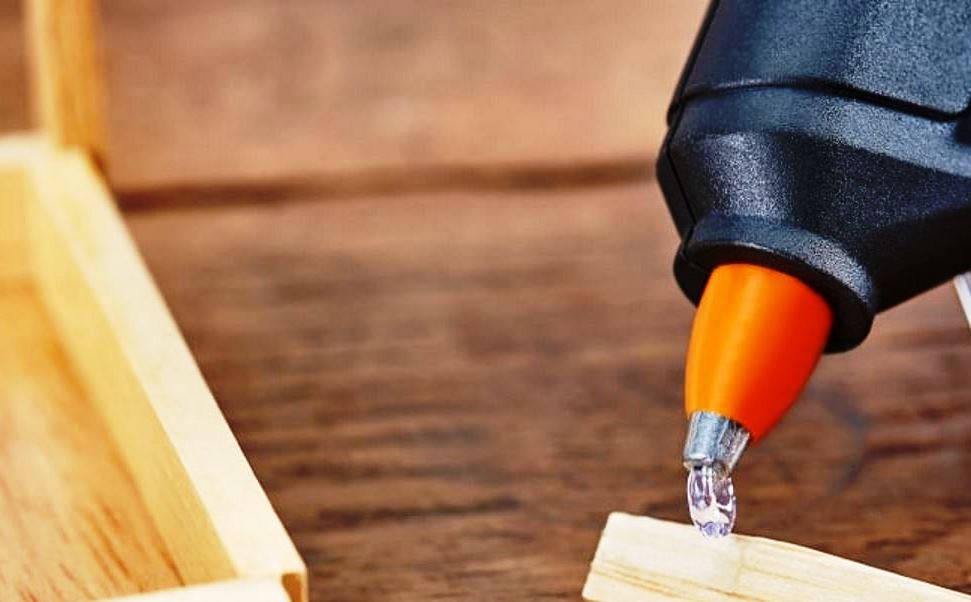
- After the gun has heated up well and ready for operation, place the hot glue gun nozzle close to the object to be glued. Next, squeeze the gun trigger gradually until the melted glue starts to flow out of the nozzle. Apply the glue smoothly onto the surface of the article, keeping the nozzle in contact with the surface to be glued.
- When working with a hot glue gun use glue moderately without exceeding the amount of glue needed to glue the article. Excess glue will harden the soft surfaces and make them unfit for use. Besides, it will flow out of the joints with an unsightly appearance.
- In spite of that hot melt glue sets fast on the surface being glued, after the parts have been joined leave the article for several minutes. The glue should harden and create a durable glue joint. Some surfaces will need more time for steadfast joining.
- At the final work stage, clean up the workplace and clean the nozzle of glue residue. If the hot glue gun has an indicator with buttons “ON”/”OFF”, slide it to “OFF” and disconnect the gun power cord from the mains.

Top 7 questions about hot glue guns
1. What makes an industrial hot glue gun different from regular glue guns?
An industrial hot glue gun is distinguished by its increased durability and output compared to more consumer-facing models.
2. What types of industrial hot glue guns are available?
These tools come in various forms compatible with a range of melt/output rates and are available to process different diameter glue sticks, with ½ inch being the most popular.
3. What are common uses for industrial hot glue guns?
Hot melts bond a huge range of materials to include paper, wood, metal, glass, and some plastics. Industries including protective packaging, product assembly, home construction, woodworking, food and beverage packaging, and automotive employ industrial-grade hot glue guns. Hot melt does not bond well to certain plastics with low surface energy.
4. How often should a hot melt gun be replaced?
If used correctly and regularly serviced, hot melt guns can last for years without requiring replacement. Not properly cleaning the gun of hot melt residue is a common way guns become jammed or broken. Fortunately, all models we offer can have individual parts replaced versus necessitating a full replacement.
5. How often should I clean my hot melt gun?
Always read the glue gun manual before servicing any tool. There is no set cadence for servicing your hot melt gun. We, however, suggest erring on the side of caution and ensuring all leftover glue gets removed prior to powering down the tool. This will prevent jams and other issues in the future. Likewise, before each use, do a visual inspection of all parts and keep your feed mechanism and melt chamber clear of debris and dust.

6. How should my glue gun be stored between uses?
Minimize potential hazards by keeping your glue gun unplugged when not in use for an extended period of time. Also, be sure to store it in a space that is clean and temperature controlled.
7. What are the benefits of using a bulk hot melt glue gun versus a stick version?
The decision to use a particular hot glue gun depends on your adhesive and end-use, substrates and product requirements, as well as how much money you are willing to invest in machinery. Bulk hot melt guns typically offer cost-savings if you anticipate using quantities of hot melt or applying glue fast. . A drawback of this approach is that the initial price associated with this specialized equipment is higher compared to stick glue-compatible models.
Where to order hot melt glue in Kharkiv?
Reliable gluing depends primarily on a correct choice of a hot melt glue, whereas ease of working depends on the equipment being used. When choosing hot melt glue sticks take into account the following factors: colour, structure of the surfaces to be joined, adhesion strength, setting time and equipment characteristics. To make this task easier for you, we suggest calling a technical specialist at Lux-Х LLC. To receive detailed consultations on hot melt glues, do not hesitate to call us by the telephone numbers on the company’s website or use the callback option.