Packaging Trends in the Brewery Industry

Packaging Trends in the Brewery Industry

The latest packaging trends for breweries filling glass bottles emphasize sustainability, innovation, and efficiency while maintaining product freshness and enhancing visual appeal. Here are some of the key trends.

Sustainability and Eco-Friendly Packaging

  • Lightweight Glass Bottles: breweries are using lighter glass bottles to reduce carbon emissions associated with transportation. These bottles use less material but still provide durability.
  • Recycled Glass: Many breweries are opting for bottles made from recycled glass to minimize environmental impact. This supports circular economies and sustainability efforts.
  • Returnable and Refillable Bottles: Refillable glass bottle programs are gaining popularity, particularly in local markets. Customers return bottles to be sanitized and reused, reducing the need for new materials.
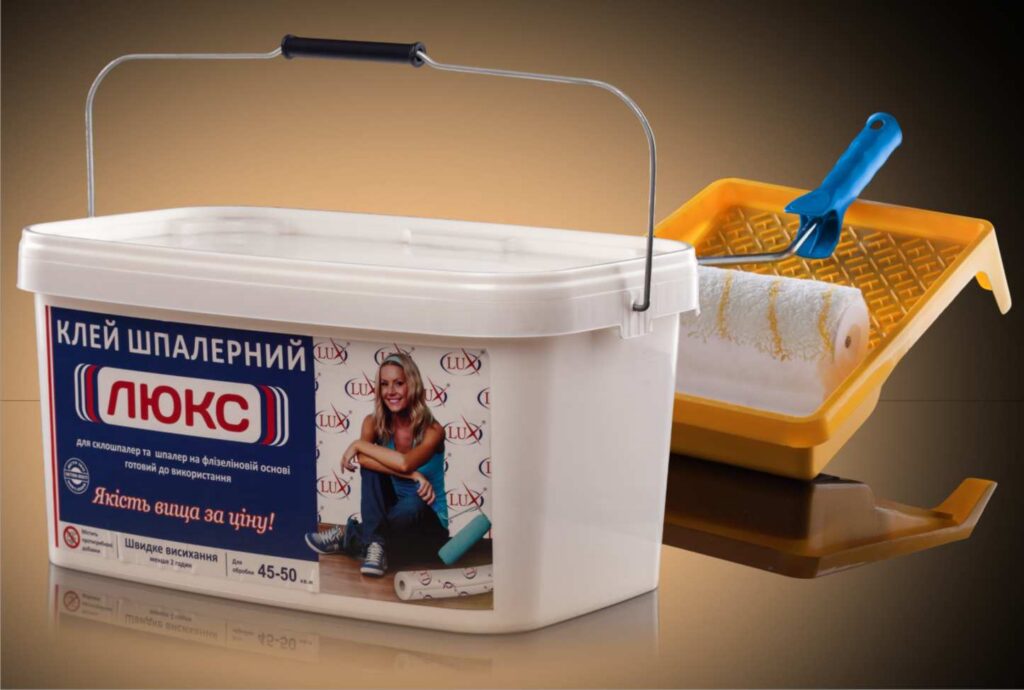
  • Returnable Glass Bottle Labeling: For glass bottles, whether returnable or one-way, LUX-X advanced water-based adhesives offer excellent wash-off performance at lower temperatures and caustic concentrations, ensuring brand integrity with ice-water and condensation resistance. The Lux-K, Lux-S and Lux-D adhesive lines provide highly effective solutions that increase production flexibility and brand trust.
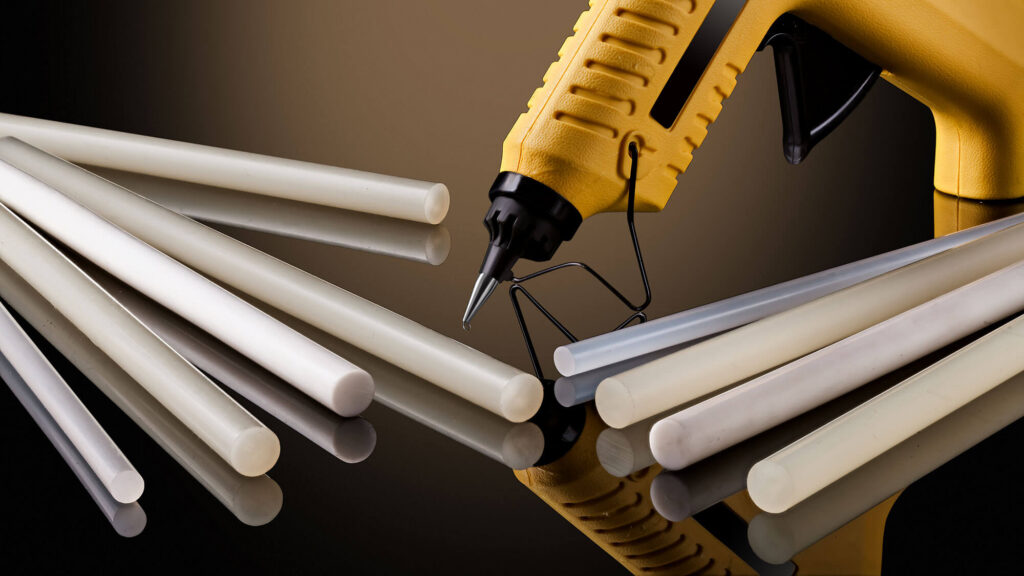
  • PET Beverage Labeling: TM BAM hot-melt adhesives for PET labeling products stand out for saving time, improving quality, and supporting sustainability goals. Designed for the reuse and recycling of PET bottles, these adhesives are certified by organizations like APR, PETCycle, Returpack, and Veolia. They are especially valued in high-speed production environments, offering excellent adhesion as various PET and rPET as well as different label substrates also on carbonated soft drinks.

Innovative Closure Solutions

  • Cork and Cage or Wax Seals: For premium or specialty beers, some breweries are using cork-and-cage closures (commonly seen in champagne bottles) or wax-dipped seals. These options give the product a high-end, artisanal look and are often used for barrel-aged or limited-edition brews.
  • Twist-Off Caps: Although traditionally crown caps are used, some breweries are adopting twist-off caps for convenience. Twist-off caps are particularly appealing for casual drinking environments where bottle openers may not be readily available.

High-Quality Labeling and Branding

  • Minimalist and Clean Label Design: Breweries are moving towards minimalist label designs with clean typography and simple color schemes. This gives a modern, sophisticated feel that stands out on the shelves.
  • Unique Bottle Shapes and Embossing: Custom bottle shapes and embossed logos or text on glass are becoming more common. These distinct bottles are more memorable and help build a brewery’s brand identity.
  • Textured and Tactile Labels: Some breweries are experimenting with textured labels that have raised patterns or embossed elements. These labels create a sensory experience and make the bottles stand out on shelves.

Automation and Efficiency in Filling

  • Automated Bottling Lines: Even smaller breweries are adopting automated bottling lines to increase efficiency and maintain consistent quality. Automated systems help reduce oxygen exposure during the filling process, which can extend the shelf life of the beer.
  • Counter-Pressure Filling: This technique is used to minimize oxygen ingress and retain carbonation, ensuring that the beer maintains its intended flavor and freshness. Counter-pressure fillers are increasingly being adopted by breweries to improve product quality in bottles.

Eco-Friendly Labels and Inks

  • Compostable Labels: In line with the sustainability trend, breweries are exploring the use of compostable or biodegradable labels made from natural materials, such as paper or plant-based plastics.
  • Water-Based or Soy Inks: Many breweries are switching to water-based or soy-based inks, which are more environmentally friendly than traditional petroleum-based inks. These inks produce less pollution and are biodegradable, aligning with eco-conscious consumer values.

Batch-Specific Information

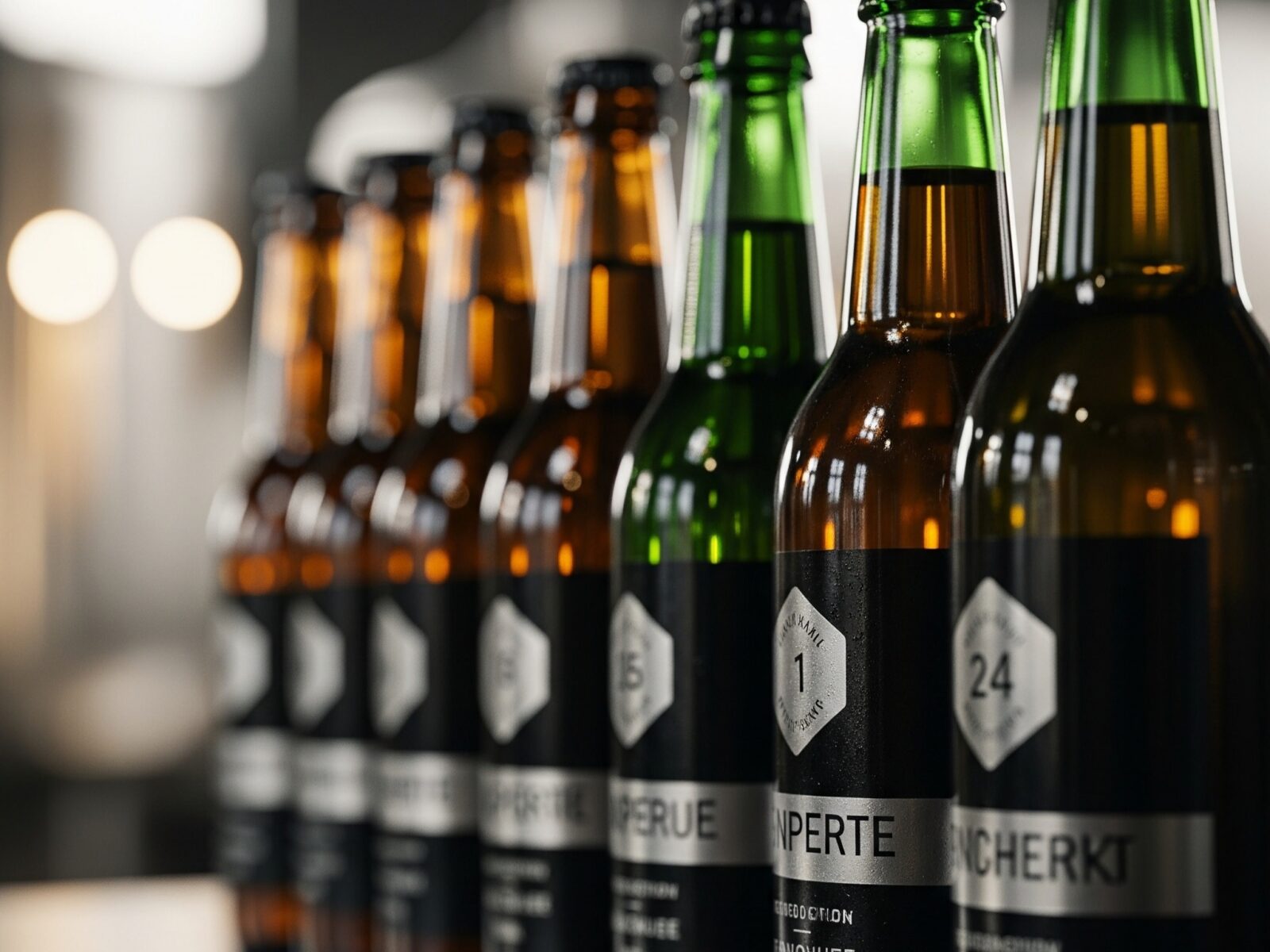
  • Batch Number and Date Labels: More breweries are incorporating batch-specific information directly onto labels. This might include bottling dates, batch numbers, or even personalized notes about the brew. It adds an element of authenticity and transparency, which consumers appreciate.

Sustainable and Multi-Use Secondary Packaging

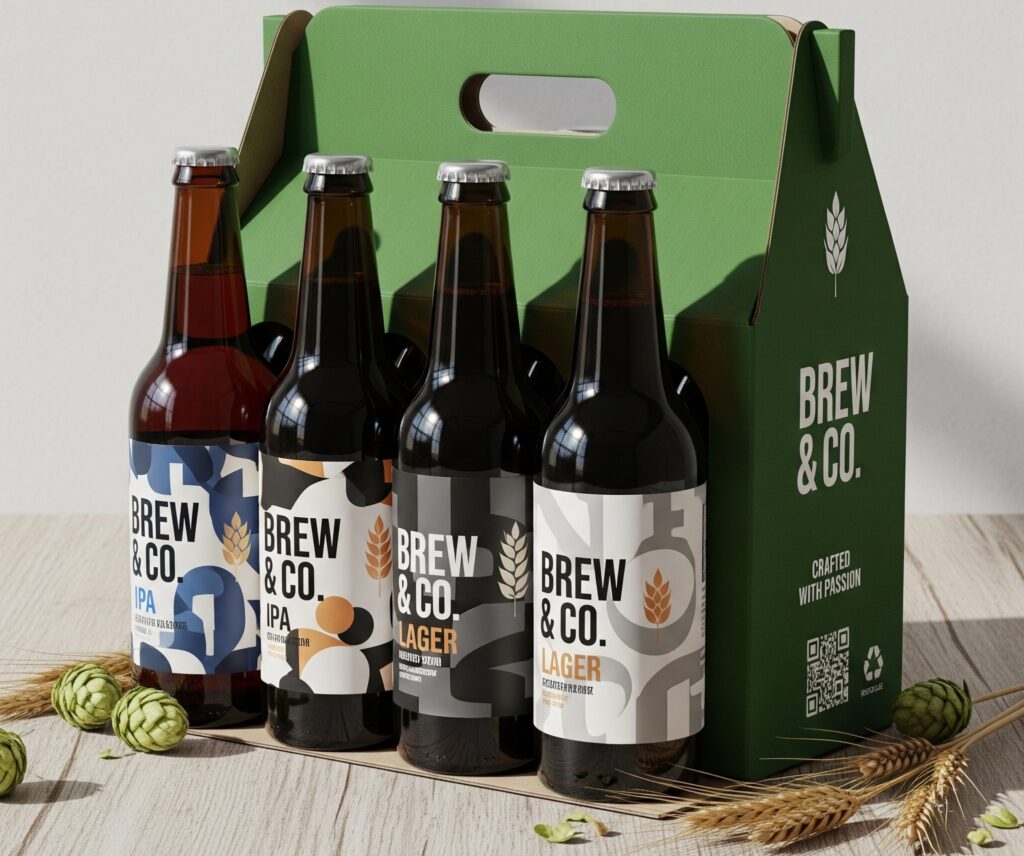
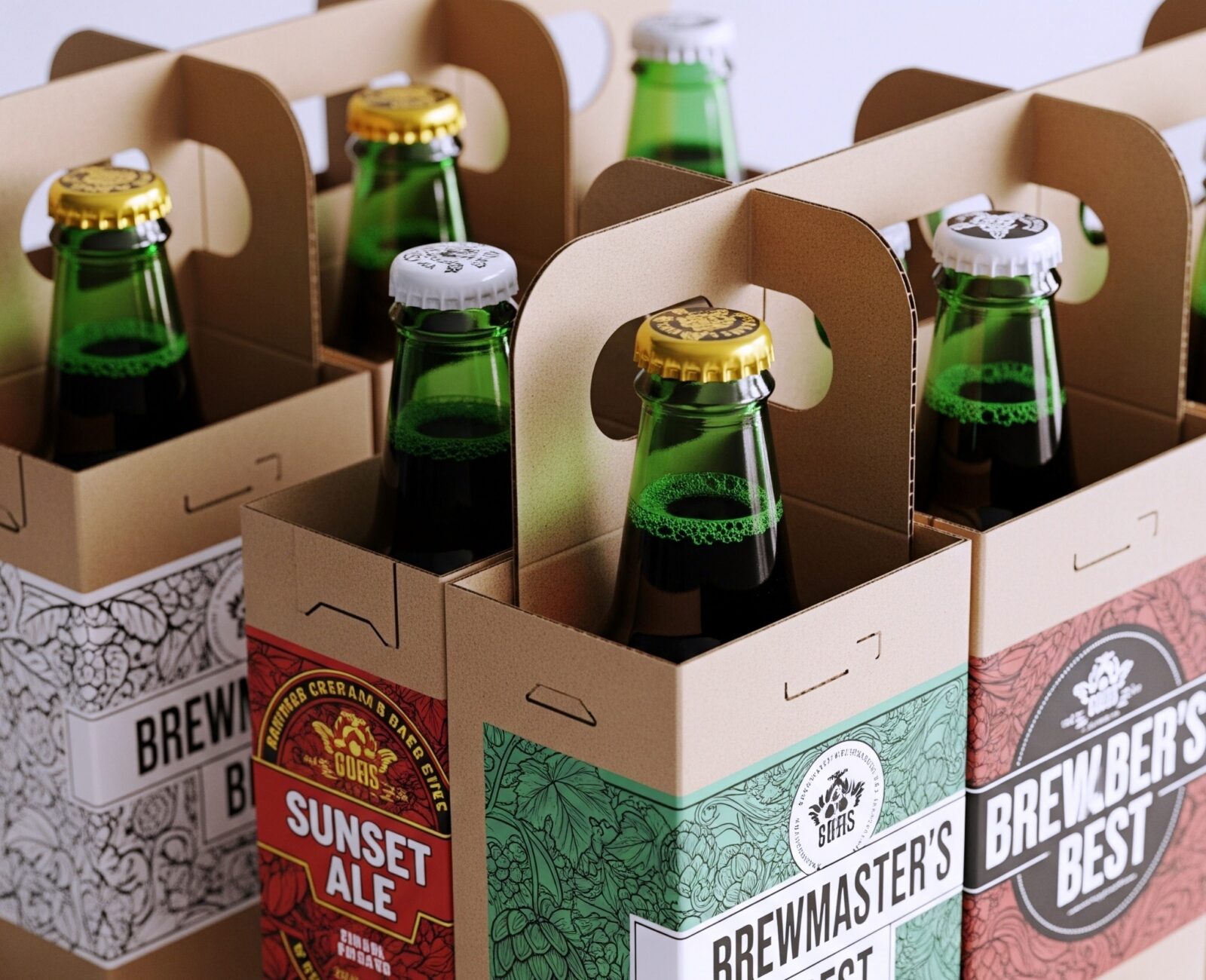
  • Cardboard Bottle Carriers: Eco-friendly carriers made from recycled cardboard or other sustainable materials are replacing plastic-based secondary packaging. These carriers often feature minimalist branding and can double as reusable carriers for customers.
  • Multi-pack Bundling: Green and eco-friendly group packaging designs are developed for cans, PET bottles and aseptic packaging, reducing material consumption and waste while increasing brand recognition and consumer convenience.
  • Palletizing Solution: Beverage palletization adhesive process improves stability during transit by applying a heavy-duty adhesive to the top of shrink-wrapped bottle caps. This adhesive helps secure stacked product packs on pallets, reducing the need for stretch wrap and saving both time and material costs. While the adhesive is durable enough to prevent shifting during merchandising, it is ultra-removable, allowing for easy separation of packaging when it’s time for display without leaving marks on the products.

Collaborations and Limited-Edition Bottling

  • Collaborative Designs: Some breweries collaborate with local artists or other businesses to design limited-edition labels and packaging. These collaborations often create a sense of exclusivity and artistic appeal.
  • Hand-Labeled, Numbered Bottles: For special releases, breweries may hand-label and number bottles, adding to the appeal for collectors. These bottles can become keepsakes for beer enthusiasts.

Functional Packaging for Consumers

  • Built-in Bottle Openers: Some breweries have experimented with packaging that includes a built-in bottle opener or pairing bottles with branded accessories like bottle openers, adding a practical value to the product.
  • Grip-Friendly Designs: To improve user experience, some bottles are designed with grooves or embossed elements that make them easier to hold and open.
  • Ecommerce Packaging: To support the growing trend of subscription based beverage services having strong ecommerce packaging is key to protect your goods and ultimately, your brand. As e-commerce grows, fulfillment centers and FMCG brands are looking for innovative and eco-friendly packaging solutions to stay competitive. The company “LUX-X” produces water-soluble packaging adhesives and presents hot melt adhesives from the British manufacturer Beardow Adams under the Pressen brand, which are specially developed for e-commerce packaging. The company prioritizes sustainability in its solutions, including adhesives for tamper-evident packaging.

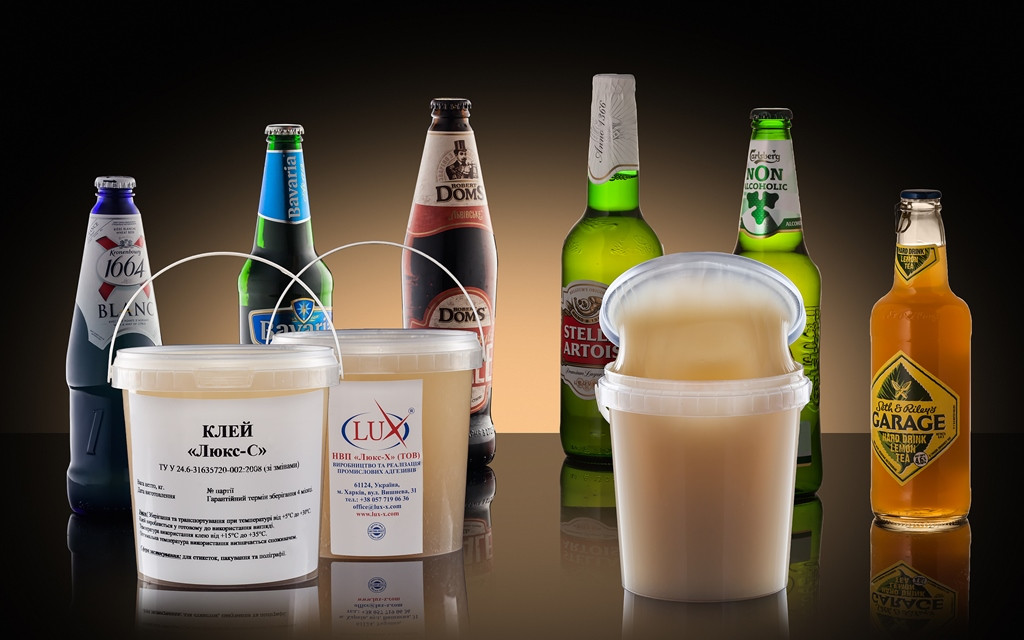
In summary, the latest packaging trends for breweries filling glass bottles are focused on sustainability, creative branding, and enhancing the drinking experience. Breweries are leveraging modern techniques to differentiate their products, while also addressing consumer demand for eco-friendly and high-quality packaging.
To talk to representatives of the company “LUX-X” and learn more about the range of adhesives for packaging and labeling of products for brewing products, contact us right now.

Olena Skotarenko

Author of the article:

Olena Skotarenko

<p>Marketing Director of the <span class="text-no-wrap">SPE «LUX-X» (LLC)</span></p>

Number of articles: 44

Articles you might like

Vinyl and non-woven wallpaper: application rules of glue

Vinyl and non-woven wallpaper: application rules of glue

A big number of diverse materials for interior and exterior decoration of premises appear on the shelves of building centers every year, meanwhile, an assortment of construction materials for repair work has been rapidly increasing.
Read article
How to use a hot glue gun

How to use a hot glue gun

The hot glue gun is a tool used for gluing parts with the help of hot melt glue sticks. The hand-held hot glue gun softens the glue, doses it and applies onto a surface. Such a tool is simple and convenient to use.

Read article
Storing «Lux» adhesives in winter time

Storing «Lux» adhesives in winter time

Dear customers, Scientific and production enterprise “Lux-X” LLC, the largest producer and supplier of industrial adhesives in Ukraine, would like you to pay attention to storage, transportation, handling, application conditions in cold weather. In winter time dispersion adhesives can be delivered only by specially equipped transport, that's why we are asking you to place the orders for shipment of adhesives in advance.

Read article
Types of wood glue. Principles of the right choice

Types of wood glue. Principles of the right choice

Not only ordinary people but professionals often arise a question: which wood glue is best suited for efficient bonding of substrates? To find out what types of glue with their basic characteristics and properties exist, we have prepared this article.

Read article
Glue Sticks: Types, Applications, and Selection Tips

Glue Sticks: Types, Applications, and Selection Tips

Adhesive rods are used in many industries as part of the process of manufacturing and assembling products. In addition, rods are used in everyday life. In decorative arts there is nothing more universal than gluing with a hot glue gun.

Read article
Polyvinyl acetate emulsion: application areas

Polyvinyl acetate emulsion: application areas

PVAc dispersion is polymerized vinyl acetate in water. The widely used PVAc adhesive is produced based on polyvinyl acetate dispersion, plasticizers and other additives. Often PVAc dispersion is called a polyvinyl acetate emulsion.

Read article
How to properly store, apply and dispose of industrial adhesives?

How to properly store, apply and dispose of industrial adhesives?

We are frequently asked about the shelf life of our adhesives, since any raw material has its own use and storage warranty period. Today we will tell you about the recommended storage duration, rules of transportation and disposal of our products: synthetic, semi-synthetic, natural dispersion adhesives, PVAc and hot-melt adhesives. 

Read article
Adhesion and possible problems

Adhesion and possible problems

When bonding any material, regardless of the type of adhesive, the result is important, i.e. the strength of the adhesive line, its resistance to various external influences and its durability. This is due to the adhesive property.

Read article
Concrete impregnation agents: their definition, types and purpose

Concrete impregnation agents: their definition, types and purpose

Concrete is one of the most durable construction materials, which is why it is used to construct military and civilian structures, including shelters, industrial, commercial, administrative buildings, infrastructure, warehouses and residential buildings.

Read article
How to dilute PVAc adhesives: tips to restore their consistency

How to dilute PVAc adhesives: tips to restore their consistency

PVAс glue is considered to be the most famous adhesive for use in everyday life. Schoolchildren and their parents are familiar with PVAс glue mixtures as the best assistant for crafts made of paper, wood and cardboard.

Read article
PVAC adhesive: an all-purpose glue and why is it still popular?

PVAC adhesive: an all-purpose glue and why is it still popular?

PVAC adhesive is one of the best-known and widely used adhesives in the world. Two chemists invented PVAC at the same time: a German and a Korean scientist who worked on the future product separately and in different laboratories.

Read article
What kind of adhesive to use for gluing fabrics?

What kind of adhesive to use for gluing fabrics?

The demand for textile industry products is increasing from year to year. In this skilled trade, it is essential that the products be neat, have an aesthetic appearance, and hold their shape and color after each washing. Hence, it is difficult to do without an adhesive in textile production because not all materials can be joined using a thread and needle.

Read article
Concrete Impregnating Agent: A Guarantee of Reliability and Resistance to Moisture of Civil and Military Structures

Concrete Impregnating Agent: A Guarantee of Reliability and Resistance to Moisture of Civil and Military Structures

Nowadays, civil and military construction cannot do without the building of various defensive structures and fortifications. Their main purpose is to ensure the safety of people and objects, to guarantee the functioning of infrastructure even in extreme conditions, while maintaining its comfortable conditions. That is why concrete is the most important material in civil and military construction.

Read article
PVAcglue’s drying rate for various surfaces

PVAcglue’s drying rate for various surfaces

One may wonder, what is the drying time of PVAc glue? The drying time hinges on the quality of glue and the materials the product is made of. This article will be helpful in finding out the drying time of PVAc glue on various surfaces.

Read article
What is used to glue paper and cardboard?

What is used to glue paper and cardboard?

Paper and cardboard are the most popular materials used in making cartons, packets, bags and other containers. An advantage of a paper package is its neat appearance and ecological safety.

Read article
Adhesives used in the production of paper towels and toilet paper

Adhesives used in the production of paper towels and toilet paper

When you think of products that are manufactured with the help of adhesives, the last thing that will come to your mind will be their use in the production of toilet paper, paper napkins or towels. However, adhesives are very important for hygiene products.

Read article
“Lux” brand water-repellent coating for corrugated board manufacturers

“Lux” brand water-repellent coating for corrugated board manufacturers

Scientific and Production Enterprise “Lux-X” (LLC) has presented a new product developed in its own scientific laboratory: The water-repellent coating used in the pulp and paper industry when corrugated board is produced.

Read article
Industrial glue: types, features, composition, application

Industrial glue: types, features, composition, application

In industry, glue began to be massively used with the advent of the first factories. Then adhesives of natural origin were in demand. In the war years, to meet the needs of the army, synthetic adhesives appeared, with which metal, leather, wood, rubber and other materials were bonded.

Read article
Merry Christmas and Happy New Year 2025 !

Merry Christmas and Happy New Year 2025 !

Dear partners and friends! Please accept our sincere congratulations Merry Christmas and Happy New Year 2025!

Read article
How to remove the glue from clothes?

How to remove the glue from clothes?

Often, when doing the repair or working with glue in the workplace, we come across the fact that some adhesives have a property of damaging the personal protective equipment, working clothes, hands, tools and other objects. Fortunately, we know how to remove the glue from fabrics and other surfaces and we will discuss this in the article.

Read article

Please wait...

We are preparing a reliable adhesive joint.