
What is used to glue paper and cardboard?
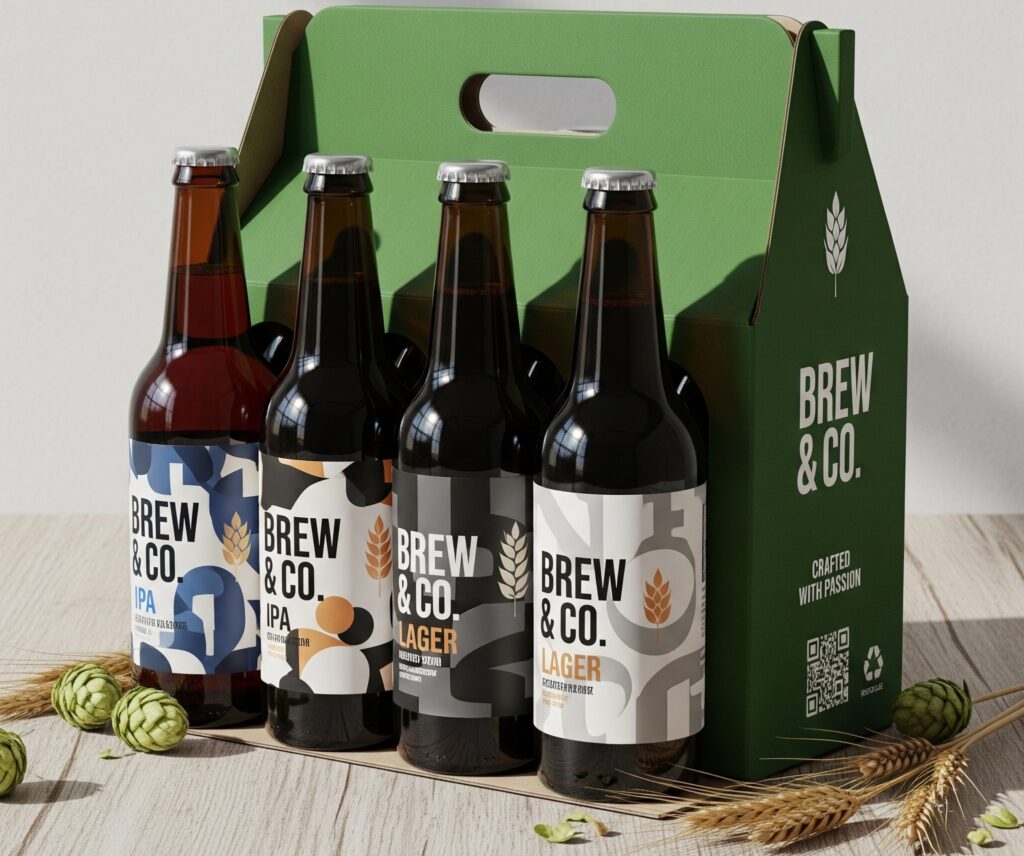
Cardboard and paper are very popular materials used in the manufacture of various containers such as bags, boxes, crates, sacks, and so on. Recently, this kind of packaging has become even more popular, with the growing tendency towards environmental friendliness, therefore it is increasingly replacing common plastic and cellophane bags. Paper products fully comply with the eco-friendly principles, they are safe and good-looking.
Remarkable that to produce one ton of paper it takes about 2.8 m3 of wood, and about 1.6 m3 of wood to manufacture cardboard.
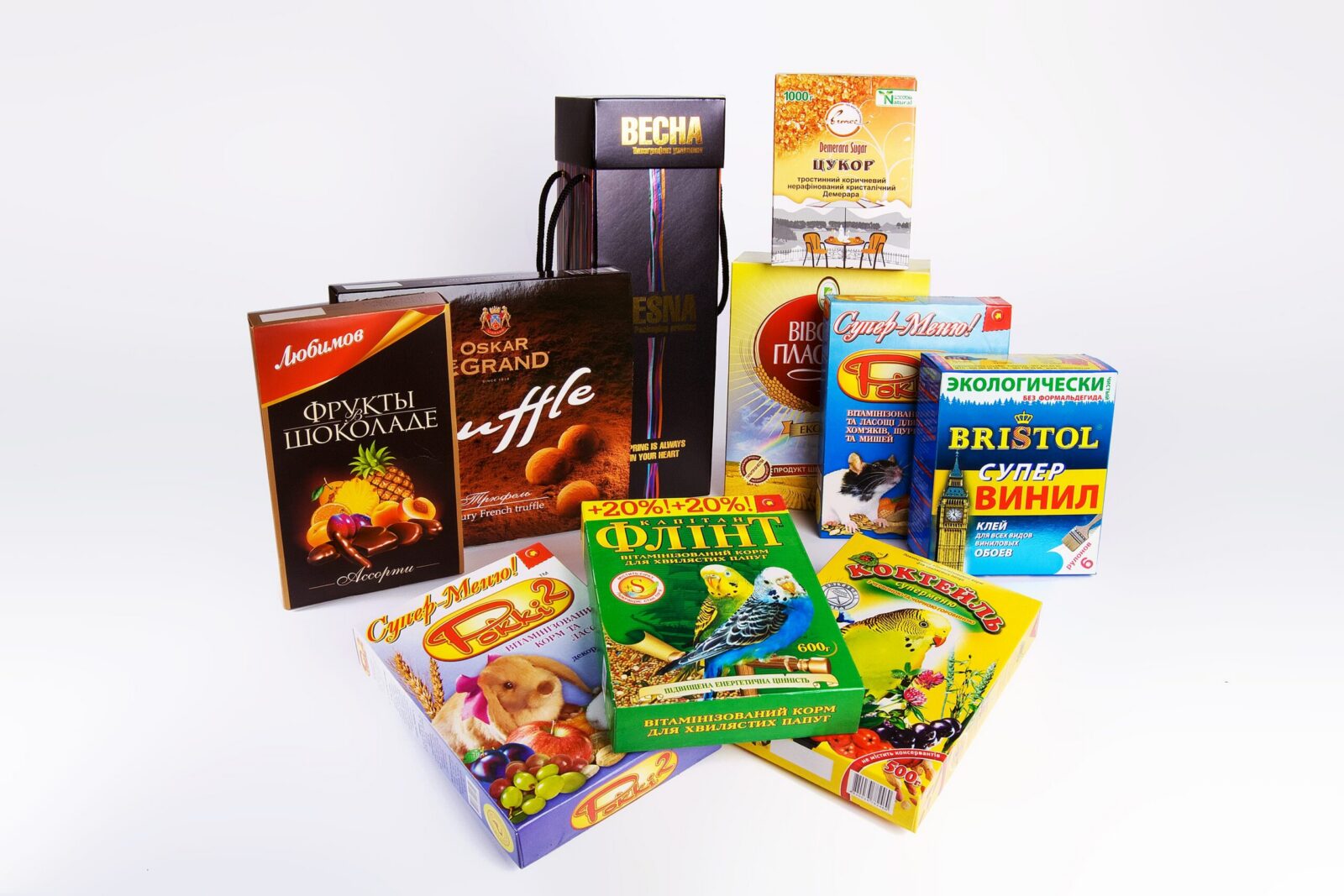
Commonly, a wide variety of consumer goods are transported and sold in cardboard packaging. Postal services use cardboard boxes to pack parcels, and makeup and skincare products stores use them for packing their items. Tableware sets and toys displayed in shop windows also have cardboard packaging. Cardboard products are so popular due to their ability to withstand heavy loads, so the contents of the boxes are properly kept and preserve their quality during storage, transportation, loading, unloading, and other operations.
High-quality cardboard is resistant even to moisture and condensation, which is often the case during transportation, with temperature fluctuations, and so on. It retains its shape and becomes even more durable due to professional adhesives used in the packaging industry.

What properties are required for paper and cardboard adhesives?
Since adhesives have a direct impact on the quality and perception of finished goods by potential buyers, there are special requirements for industrial adhesives. These are as follows:
- Excellent adhesion properties, since paper and cardboard adhesives have to provide a durable and reliable result, with the surfaces bonded perfectly to avoid peeling off.
- The adhesive line should be flexible so that after processing the finished product can be used as intended and never come apart.
- Optimal viscosity. This parameter directly hinges on the equipment used at a production facility to apply the adhesive onto the paper or cardboard surface. For example, where you use a nozzle as the application device, you will need a low-viscosity adhesive so that it smoothly goes through a thin hole. When you opt for the roller application method, you will need an adhesive with higher viscous properties, for a low-viscosity adhesive will just keep flowing down the roller’s surface. The choice of a product in terms of its viscosity hinges also on the density of cardboard or paper, as low-density cardboard and too thin paper will get soaked with the adhesive right away, the material will become too moist with its surface prone to warp.
- The adhesives are manufactured in different colours depending on their type, but you should opt for a clear adhesive in working with paper and cardboard. This is especially important for white-coloured materials, as using a coloured adhesive would leave unattractive stains.
- Safety and environmental friendliness. Specific pungent odour and toxic components are absolutely unacceptable in adhesives, especially if they are used for packaging hygiene products, foodstuffs, children’s toys, and so on.
The best paper and cardboard adhesive
It is a common question asked by manufacturers of packaging and men fixing things around the house what kind of an adhesive is the best to use in gluing paper and cardboard. If you need to glue paper bags or make a cardboard box, Lux-X experts recommend using:
- PVAc adhesive and PVAc dispersion;
- water-soluble adhesive based on synthetic polymers;
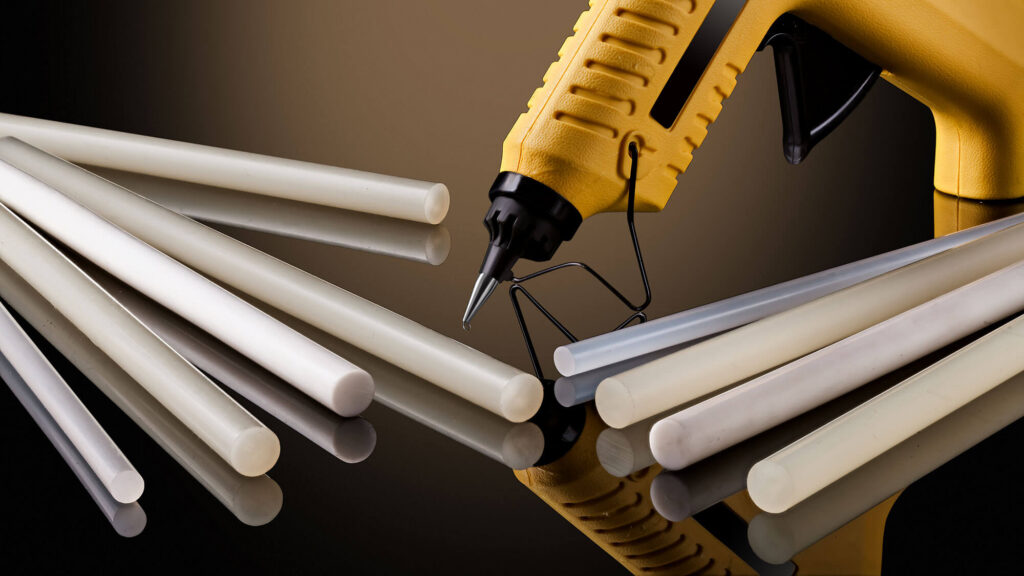
- hot-melt adhesivehttps://lux-x.com/ru/produkciya/klej-rasplav/.
Apart from these, natural adhesives are used in some cases, such as casein or starch-based adhesives, to paste labels on packaging.
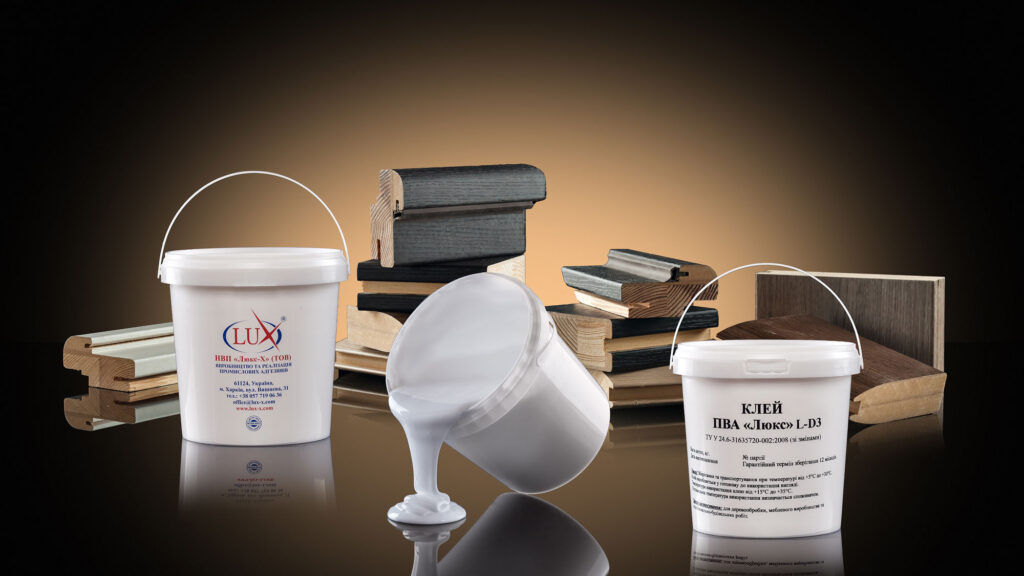
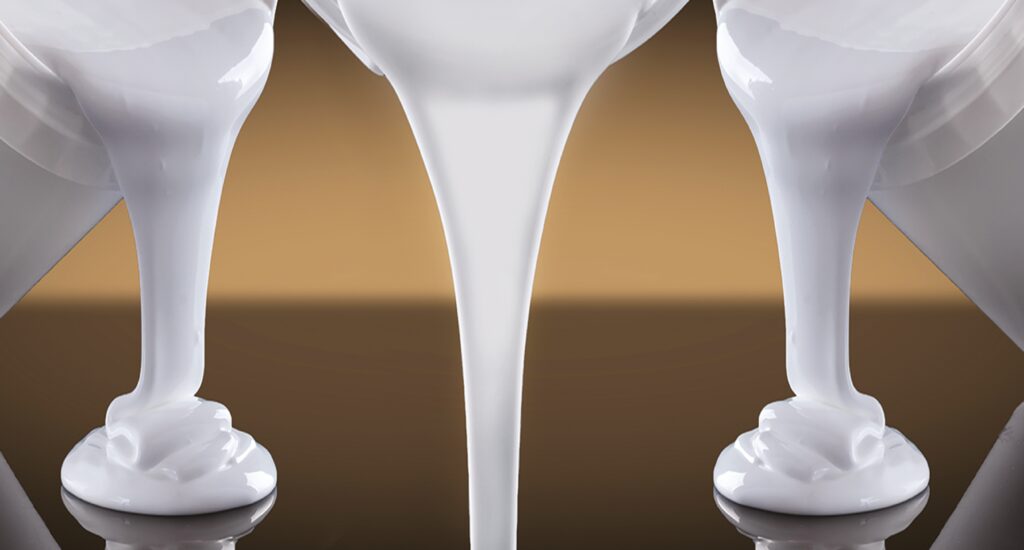
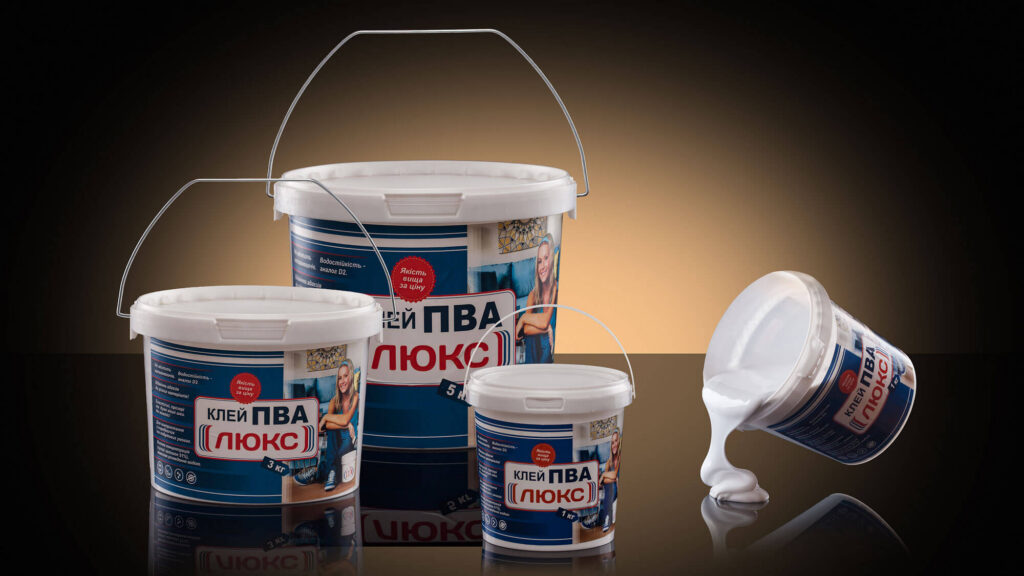
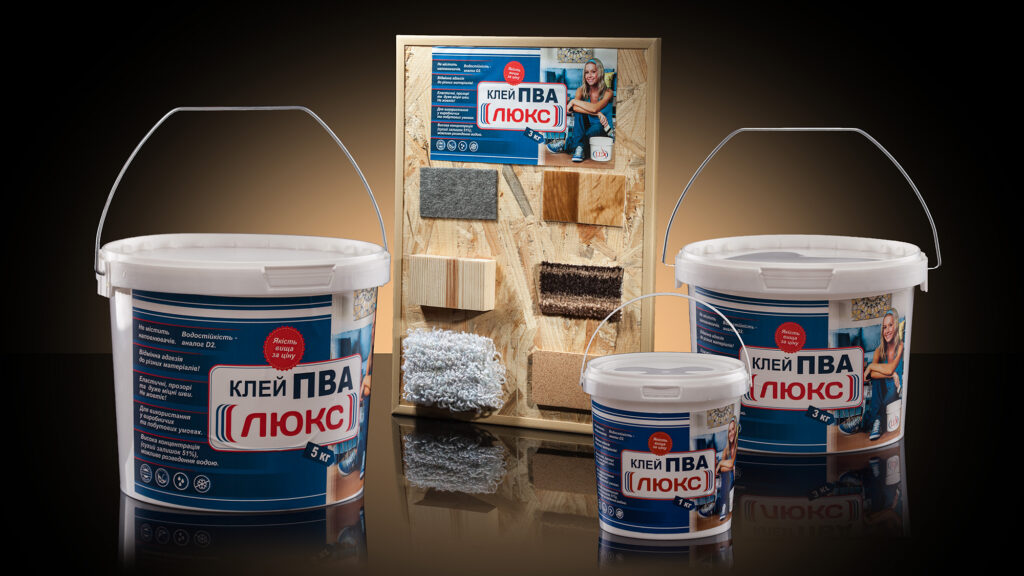
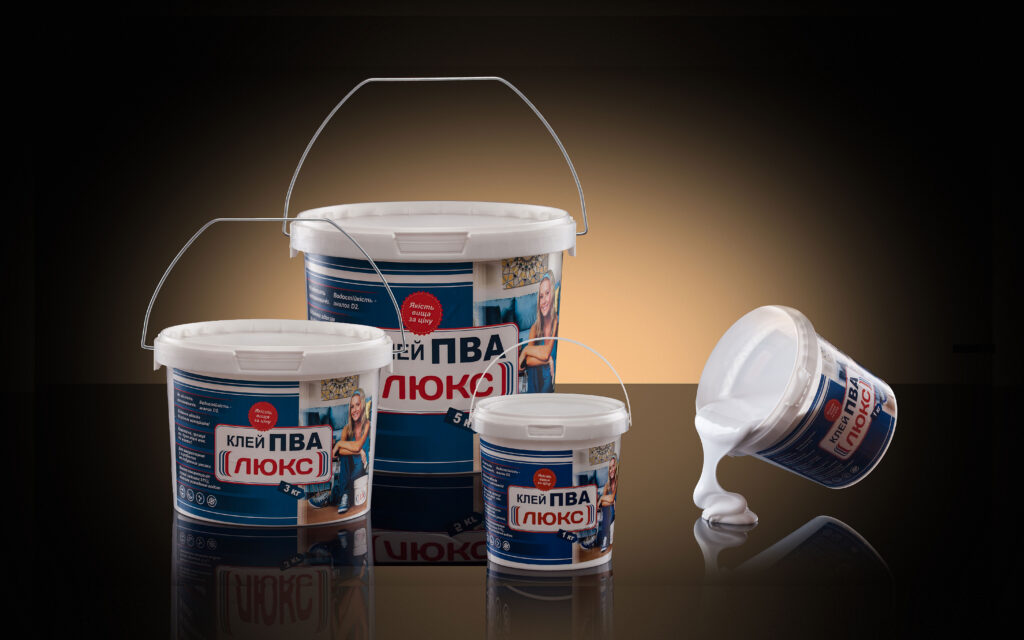
PVAc adhesive is a polyvinyl acetate dispersion with modifiers that ensure its stable composition. The product boasts high adhesion properties, therefore it is widely used in furniture manufacturing, wood processing, packaging, printing, construction and other areas. Being environmentally friendly and all-purpose, this type of adhesive is widely used in everyday life and in the production sector. It is sold ready-to-use, so you do not need to dilute it or prepare it otherwise before application. Although the adhesive is white-coloured, its adhesive line becomes transparent after it is completely dried-up, and it does not acquire yellowish tint over time.
The basis of the PVAc dispersion is the vinyl acetate monomer. It may contain a plasticizer or may not have any, to make the end-product plasticized or unplasticized. PVAc dispersion is used in the textile, printing, packaging, furniture, woodworking, paint and varnish industries, as well as in construction and for household needs. The product is non-toxic and non-flammable, it does not leave any stains, with its adhesive line becoming transparent when dried up.
The adhesive made of synthetic polymers is water-soluble, it contains EVA, PVAc, acrylates, and other components. It is completely safe for human health and environment, non-combustible, with no toxic components. This adhesive is commonly used to paste labels on paper, cardboard, to manufacture cardboard containers, in printing industry, for cold lamination, production of adhesive tapes, and so on.
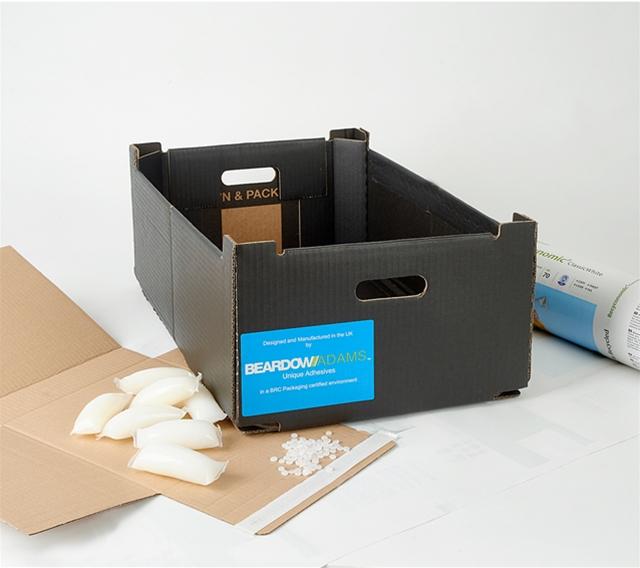
In our company, hot-melt adhesives are represented by products of BeardowAdams (United Kingdom). Produced as solid substance, for example, in sticks, granules or pads, they get melted before use with the help of special equipment. Hot-melt adhesives are applied in printing industry, to paste labels, in the packaging and woodworking industries, in the production of adhesive tapes, and so on.
Casein adhesive is made of casein obtained from milk protein. This substance has high adhesive properties and is safe for human health. Its main advantages are environmental friendliness due to the natural ingredients in its composition, the absence of toxic additives, so it may be used in many industries, including in the production of packaging for children’s goods, hygiene products, etc., that is the areas in which health safety is of utmost importance. Apart from the above, casein adhesive is used to paste stickers on glass, metal and PET containers, excise labels, and in some cases it is used in woodworking industry as an additive to various construction and finishing solutions to improve their properties.
Starch-based adhesive is produced on the basis of modified starches and water acting as a solvent. After the starch swells, we get a colloidal solution of varying viscosity. Due to its chemical properties, starch-based adhesive gets thicker over time, so to prevent this process, the modifiers should be added to its composition to make it more stable. Like casein adhesive, it belongs to the group of natural adhesives, being non-toxic, non-combustible, environmentally friendly, with no elements in its composition able to damage the parts of the equipment. At the industrial facilities, it is primarily used for pasting labels on glass, tin, cardboard, PET and paper surfaces.
Specific features and technical specifications of these adhesives are briefly outlined in the table below.
Type of adhesive | Brand | pH | Operating temperature, °C | Shelf life |
Casein | Lux-S | 6-8.5 | +15…+35 | 4 months |
Starch-based | Lux-D | 4-8 | 4 months | |
PVAc | Lux | 4±1 | 1 year | |
PVAc dispersion | Lux-R – R-20 | 4±1 | 4 months | |
Polymer-based | Lux-R | 3.8-8.5 | 4 months | |
Hot-melt adhesive | BAM, Prodas, Pressen, BAMFutura | — | +100…+220 depending on the brand | 3 years |
What is the best adhesive to glue cardboard pieces together?
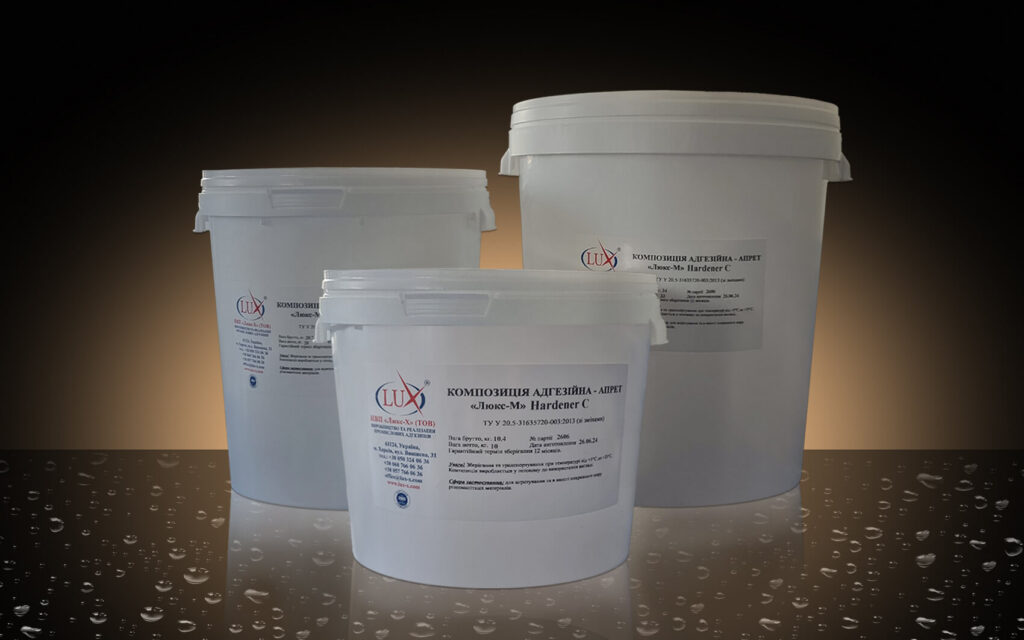
If your company engages in manufacturing crates, cardboard boxes and other types of packaging products, we recommend to pay your attention at the range of our Lux R adhesives. These are dispersion adhesives (including acrylates, PVAL, EVA, PVAc, and so on.). Designed especially for the printing and packaging industry, they are the best option for gluing cardboard surfaces, paper and cardboard-wound materials. These adhesives may be applied either manually, or with the use of roller or disc equipment.
How to glue cardboard pieces together using an adhesive other than Lux-R? If you have hot-melt adhesive application equipment set up at your industrial facility, you can use hot-melt adhesives produced by BeardowAdams TM.
These adhesives have proven to be highly durable and reliable in cardboard processing, as they boast high viscosity properties, with the degree of viscosity varying depending on the specific brand. As soon as it is completely hardened, the adhesive line guarantees strong bonding able to resist various negative factors. Hot-melt adhesive can be used on the equipment with high and low product feed rates, and it will not damage its elements. For example, the BAMFutura adhesives do not clog filters and nozzles, and after their application there is no residue left inside, that is why they are also called adhesives with a self-cleaning effect.

What kind of adhesive is the best for gluing paper?
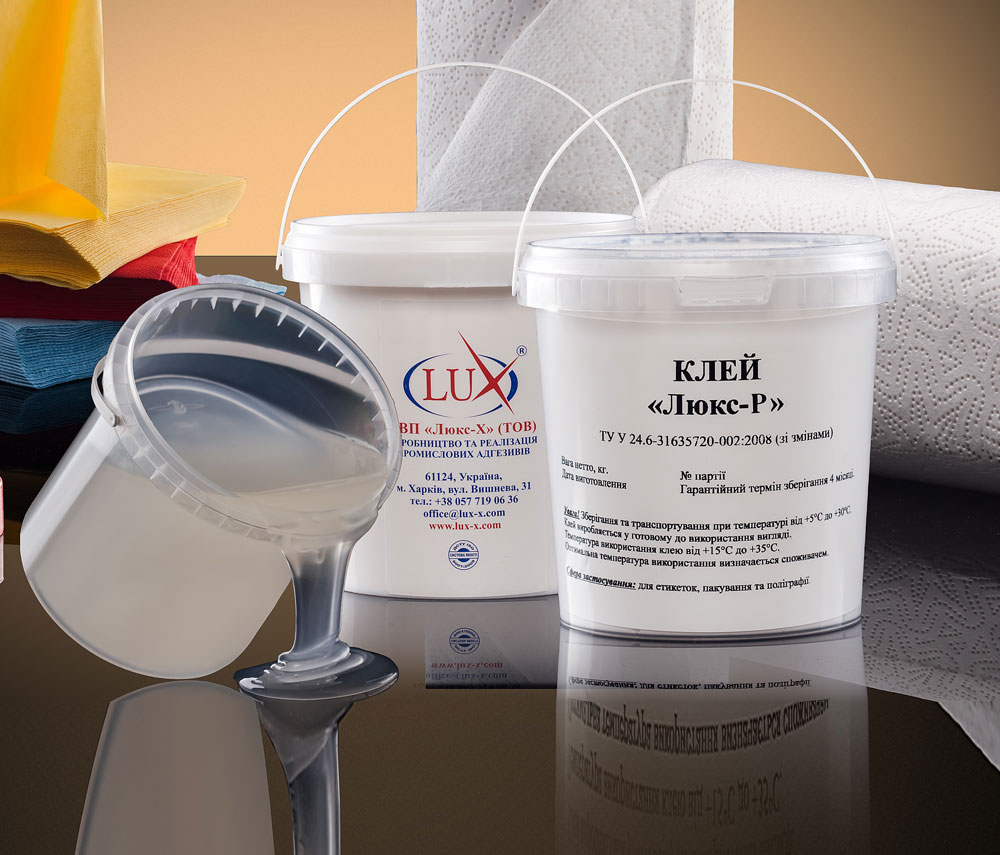
If you need to glue paper pieces together, we recommend using adhesives of the Lux-R category, with the PVAc dispersion being the highlight of this line. Sold as a ready-to-use adhesive, it is a white-coloured liquid with no third-party impurities. After application to the surface and drying-up, the adhesive film becomes completely transparent so the product looks neat and nice. The dispersion is completely safe for human health, therefore it may be used for packaging children’s goods, foodstuffs and hygiene products.
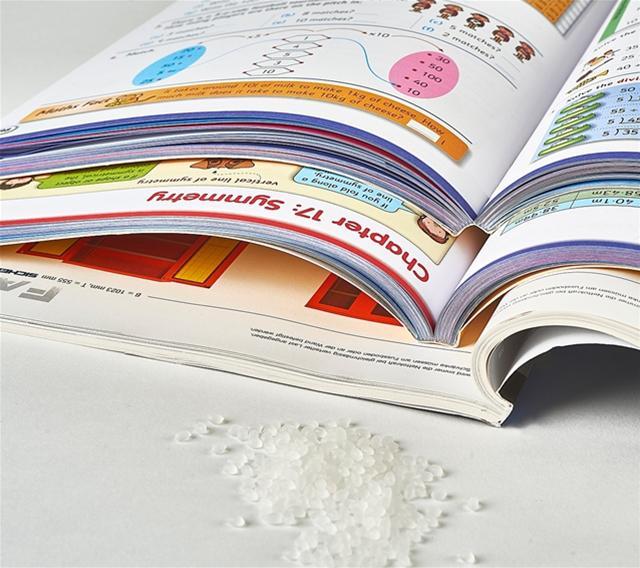
In addition to PVAc dispersion, you may use hot-melt adhesive produced by BeardowAdams TM (United Kingdom) designed especially to be used in the printing industry. The brand guarantees high quality in the processing of printed publications. Hot-melt adhesive has proven its high quality when gluing different types of paper and binding materials, as it boasts excellent adhesion properties and high drying rate. You can use BAM TM adhesive in gluing books, notebooks, magazines, catalogues, textbooks, advertising inserts, and so on.
What kind of adhesive is the best for gluing paper and cardboard?
In production or at home, we occasionally need to glue together paper and cardboard pieces. For example, your kid may need to do it at school lessons. In this case, PVAc adhesive will be the best option.
To make the adhesive line really strong and ensure that the paper is glued on evenly, we may suggest some easy-to-follow recommendations:
- make sure to apply the adhesive in a thin layer and only on one of the surfaces, not on both of them at once;
- to prevent the paper from sliding off, it is advisable to apply the adhesive on the cardboard, not on the paper;
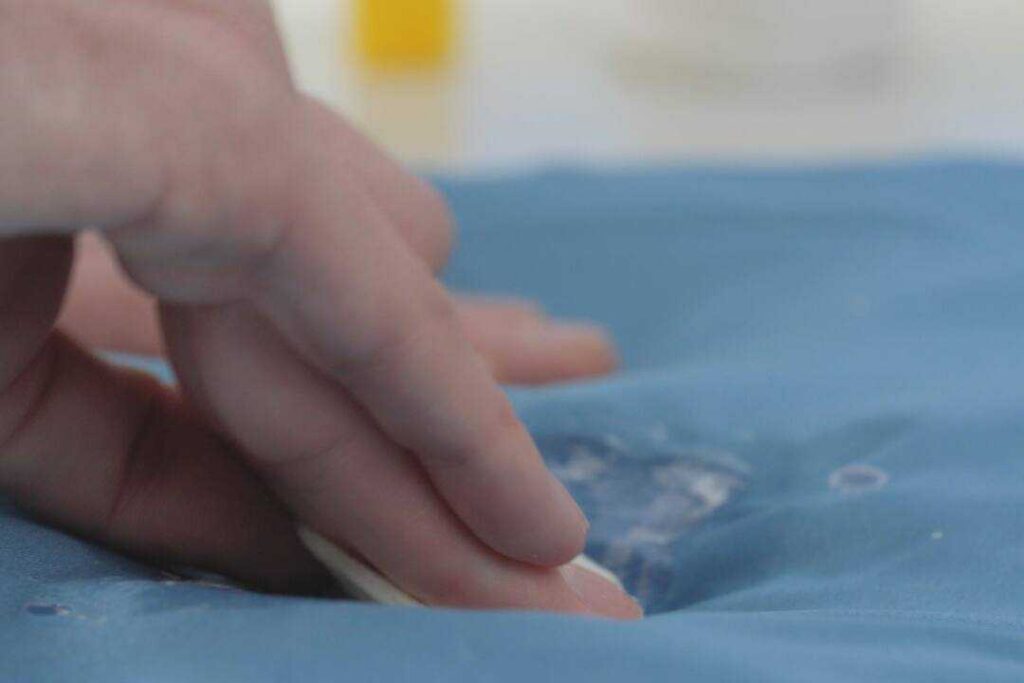
- after the adhesive’s application, press both elements down and neatly smooth the surface out to prevent the air bubbles showing up;
- for the best results, after gluing the elements together, put them under the press for about 15 minutes (whenever practicable), and than leave the product to dry up completely for a day.
How to properly prepare the surfaces for bonding?
In order to achieve high adhesion and reliable bonding results, we recommend to do some preliminary preparation. First, if you opt for PVAc, you should stir the adhesive up properly to make its structure homogeneous. Secondly, make sure that the surfaces are clean. For this purpose, remove all dirt and dust from the paper or cardboard using a dry sponge. Make sure to apply adhesive to one surface in a thin layer – either manually or by machine. Do not apply too much adhesive, as it will go out of the surface being glued, and the result will be less reliable and not so nice as intended. Place another element on top, adjust its position and press it firmly against the first one. Whenever practicable, put the glued parts under the press or press them down together with some heavy weight.
Specific aspects of gluing thick cardboard pieces
Thick cardboard is more difficult in gluing than regular paper, because of its thickness. You will require a larger quantity of adhesive to properly soak the cardboard fibers, but mind that you apply not too much of it. In all other cases, the process of gluing cardboard is the same as gluing paper: you need to press the pieces together tightly after the adhesive’s application and give them time to dry up completely.

Here’s a tip: before gluing large cardboard pieces together, try several types of adhesives on small cardboard strips to assess their performance, which will make it easier to choose an adhesive with the best properties.
Common mistakes when gluing paper and cardboard
Occasionally you may have problems when gluing these materials together, as the pieces may slide off, the paper may get soaked and wrinkle, which results in poor-quality and unattractive product. Let’s consider the main problems and ways to solve them.
Paper soaking | First of all, the main reason the paper gets too wet is applying too much adhesive onto it. Be sure to apply it in a thin layer, and the problem will not arise. If you glue paper and cardboard pieces together, it is advisable to apply adhesive to the cardboard only, then press the paper against it. Do not apply the adhesive on the paper piece only or on both surfaces at once. |
There are creases on the paper | Sometimes, the paper gets wrinkled after gluing, which makes the product look not so nice as intented. This happens due to soaking (see above) and untimely smoothing out of the material. Do not apply too much adhesive, be sure to smooth out the surface after its application, and press the pieces down with some heavy weight for the best results. |
The edges of the paper slide off | This also happens due to an excess of adhesive, so you should keep it in mind while applying it on the surface. The initial setting time hinges on the properties of a specific adhesive, but in most cases you always have at least a few seconds to adjust the paper. |
What are the storage conditions for paper and cardboard adhesives?
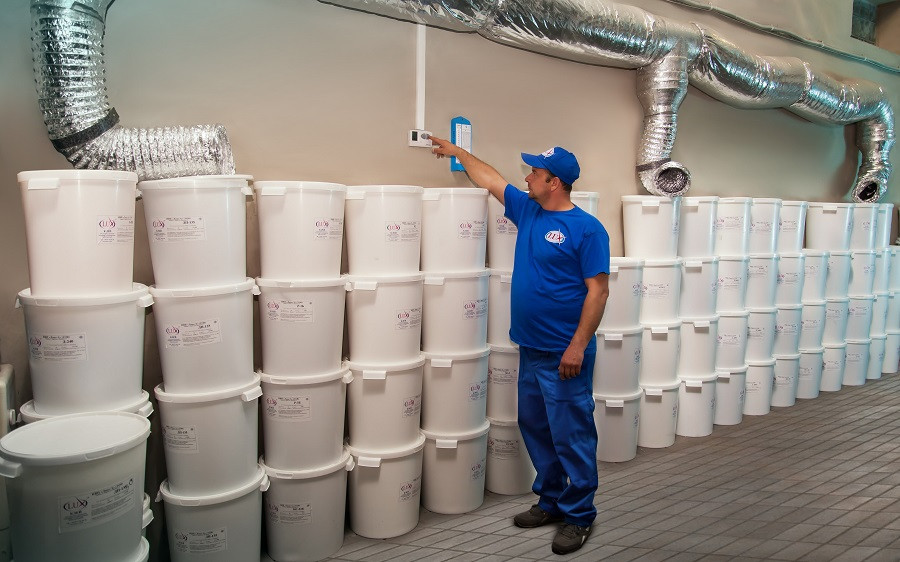
To preserve the properties of adhesives, they must be stored in the original tightly closed containers. Keep them in a dry room with a normal humidity level (up to 60%) maintained and the temperature within the range of +5℃ … +30℃. Make sure that containers with adhesives are not exposed to direct sunlight. Specific recommendations depending on the type of adhesive are indicated on the packaging. Also, our specialists will be happy to advise you on the storage conditions of a particular adhesive.

How to buy paper and cardboard adhesive?
The choice of a specific adhesive depends on the characteristics of the material and equipment installed at your production facility. To get professional advice, please use the feedback button on the website or call the numbers listed on the Contacts page. Lux-X specialists will give you recommendations on the best type of adhesive to use in your specific situation, and provide technical support.