
Adhesive for beams: kinds, composition, characteristics
The quality of wooden materials has an impact on the appearance and safety of articles and structures. Special attention should be paid to choosing an adhesive when making glue laminated beams. Not all adhesives in the market are suitable for laminated beam gluing. An wrongly chosen adhesive can produce an unstable wooden structure and a tarnished reputation of the entity that produced such beams.
A glue-laminated beam comprises bonded together radial cut wooden planks. Timber is used for building wooden houses and summer cottages, wooden window frames, doors and other articles. The construction industry uses glue-laminated wall and bearing or support beams.

As compared to a solid beam, a glue-laminated beam has the following advantages:
- high strength and made of dense log parts;
- aesthetic appearance of timber;
- resistant to mechanical damage;
- smooth surface needing no additional decking.
- fireproof.
Kinds of adhesives for beams
The choice of an adhesive for beams depends on the physical characteristics and the features of the lumber, such as porosity, material hardness, and the presence of acids and tanning substances in the composition. For instance, if the beam is made of oak or beechwood, we recommend using a viscous adhesive with a dry solid content of no less than 50%, which is pressed at a high temperature. When choosing an adhesive composition, take into account its cost, safeness and physico-chemical properties.
The following adhesives are used for gluing beams:
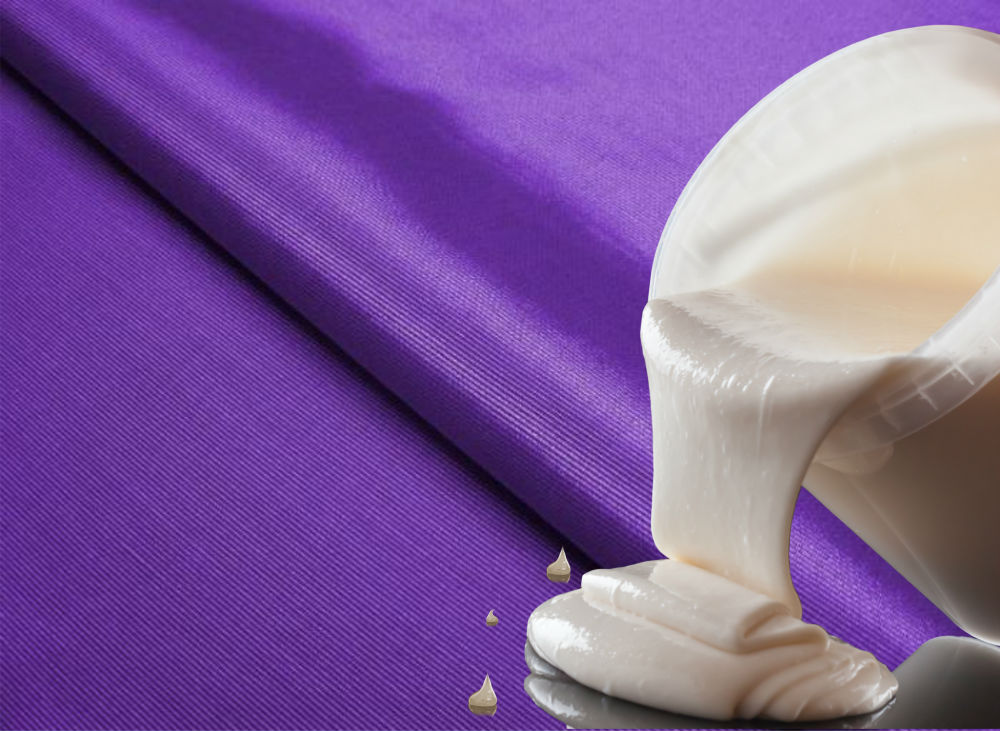
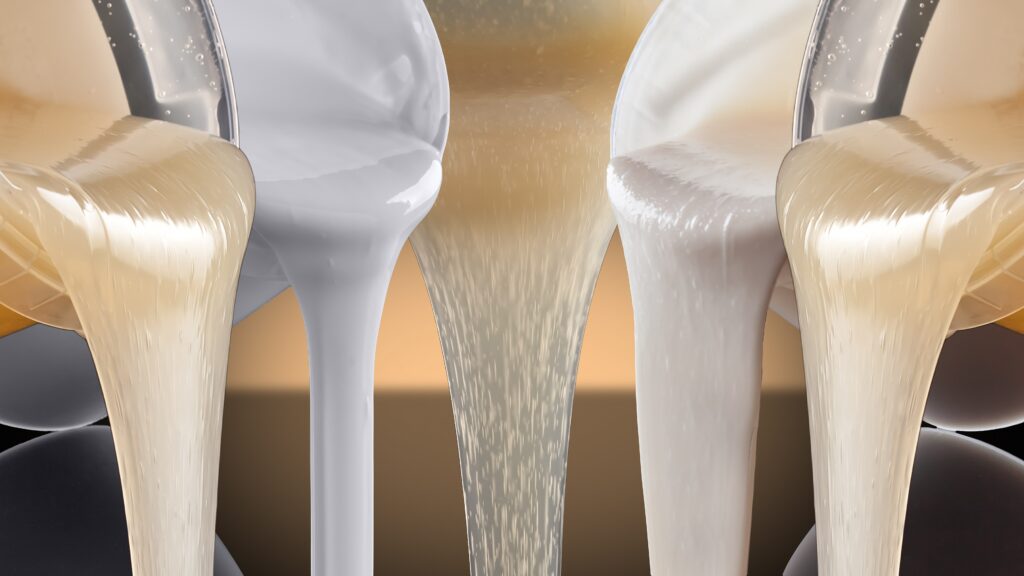
- Polyvinyl acetate (PVAc) based adhesive – used for gluing furniture parts and carpentry articles. The adhesive is harmless and non-combustible because it is a water-based one. Due to its low viscosity, the adhesive demonstrates fine workability properties. Most often a PVAc adhesive is a single-component product, but sometimes a second component is added – a hardener to achieve the D4 water resistance level according to DIN EN 204. A quality PVAc adhesive creates a colourless glue joint.

- Polyurethane adhesive – sets fast, though the adhesive absorbs moisture from the timber and the beam cracks with time.
- Resorcinol resin adhesive – ensures long-lasting bonding of wooden parts and is characterised by high workability. Following setting, the adhesive joint becomes dark in colour. The adhesive is used for gluing workpieces made of pine, spruce and other softwood. Since the adhesive contains formaldehyde, it is used only for outdoor work. The main drawback of the adhesive is its high cost.
- Melamine adhesive – a durable and moisture-resistant adhesive containing formaldehyde. It is resistant to chemical substances, light and heat. In spite of the formaldehyde component, the adhesive is less toxic, though its cost is high. The adhesive is used for bonding workpieces.
- EPI adhesive system – used for making wall beams. The adhesive contains no formaldehyde and it is transparent after drying.
- Casein glue – for use in woodworking it is purchased as a powder. To make a ready-to-use glue, the powder is mixed with water in a 1:1.7 to 1:2.3 ratio. The mixture is stirred for 40-60 minutes. Casein glue in powder form creates a reliable and waterproof adhesive bond and it can be used for making carpentry articles.
The least environment-friendly adhesives are the melamine and resorcinol resin ones due to the presence of toxic substances in their composition. These adhesives are used for making the load-bearing structures of industrial buildings, and motorway and railroad bridges
The characteristics of the process of gluing timber
Technologically, beam gluing takes place under definite conditions that ensure a strong adhesive joint and, as a result, quality products.
All the indicators that characterise the gluing process are classified conventionally in four groups.
• The first group of characteristics concerns the environment where gluing is taking place: air temperature and humidity.
The room temperature should be within 20 °С. With lower temperatures, adhesive drying takes longer. Higher temperatures reduce the adhesive lifetime, which can be compensated for by reducing the amount of the hardener in the composition (if the hardener is present).
With hot gluing, the room temperature conditions affect less the adhesive joint and the product quality.
The optimal air humidity should be 50-65%. With such indicators, the beam remains moderately moist and does not become too dry.
• The second group includes timber properties: moisture content and surface roughness.
Timber moisture content should be within 3-12% to ensure a high bonding capability of the adhesive.
When gluing wooden surfaces, a small beam roughness is admitted. Prior to being glued, the parts are machined (sanding, planing) to prevent surface contamination during work. Wood is machined to remove the layer formed on the surface during timber drying.
• The third group of indicators characterises the adhesive physico-technical properties: dry solid content, viscosity, duration of jellying at 20 °С (or 100 °С).
The adhesive dry solid content depends on the adhesive composition. Protein-based glues contain 10-15% of a dry solid; resin adhesives contain 30-50% and are used for impregnating veneer.
When gluing veneer and solid wood, synthetic adhesive mixtures are used with a dry solid content of 60-70 %. Such an indicator makes the joint strong due to minimal contraction of the adhesive joint.

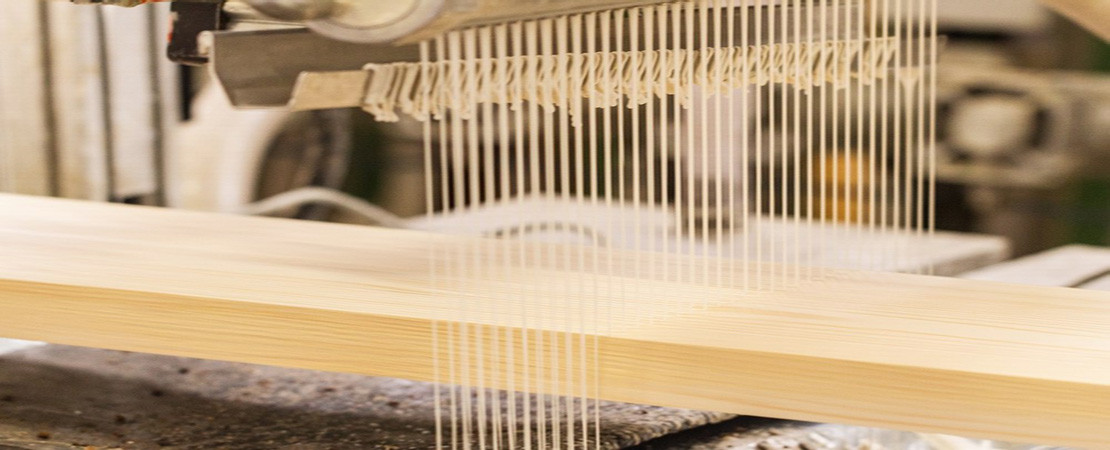
• The fourth group includes indicators that are typical for the gluing process: adhesive application rate, bonding pressure, and temperature and holding pressure time.
Open holding time depends on the kind of adhesive, materials being glued and environmental factors, and it is 5 to 25 minutes. This interval is required for evaporation of excess moisture or solvent from the adhesive.
Gluing pressure depends on the kind of adhesive, adhesive solution viscosity, degree and duration of material compaction, as well as the rigidity of the glued elements. The minimal gluing pressure is chosen depending on the surfaces being glued. The pressure is increased for rough surfaces.
Time of holding under pressure during cold gluing depends on the adhesive characteristics, timber species and gluing conditions. With increasing room temperatures, the time of holding under pressure is shorter. With high moisture content of the material being glued, and with much stricter requirements to article reliability, the holding time increases.
The gluing process is completed by finishing working of the material being bonded: cooling, holding the workpieces, conditioning, heat treatment, etc.
Holding glued workpieces is required for complete glue setting and uniform moisture distribution in the parts. Such a process is typical for the cold gluing method, and in some cases, for hot gluing, e.g., gluing plywood with phenol-based adhesives if the binding substance does not set completely under the press.
Conditioning – the process of bringing the temperature of the material being glued to the ambient temperature. Conditioning is recommended for both cold and hot gluing.
Workpieces glued using the cold method are held and conditioned at normal air temperatures and humidity for 24 hours and longer.
Chipboards are conditioned in special chambers at temperatures within 50-60 °С. If needed, the chipboards are moistened and then held in compact stacks. Cooling prevents adhesive destruction under high temperatures.
Which adhesive is best for gluing beams?
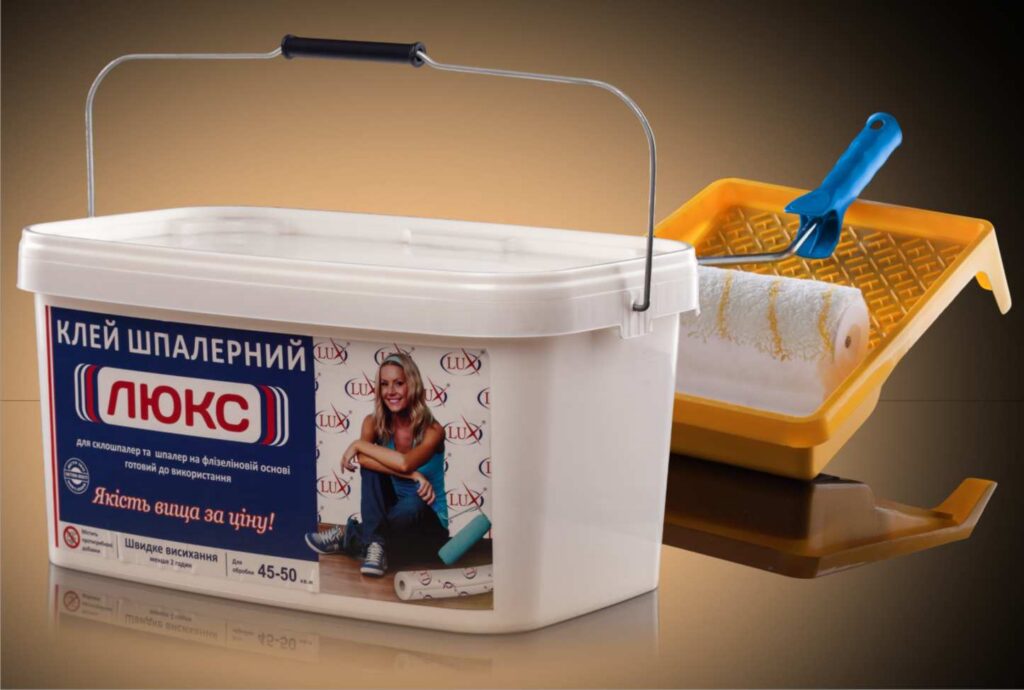
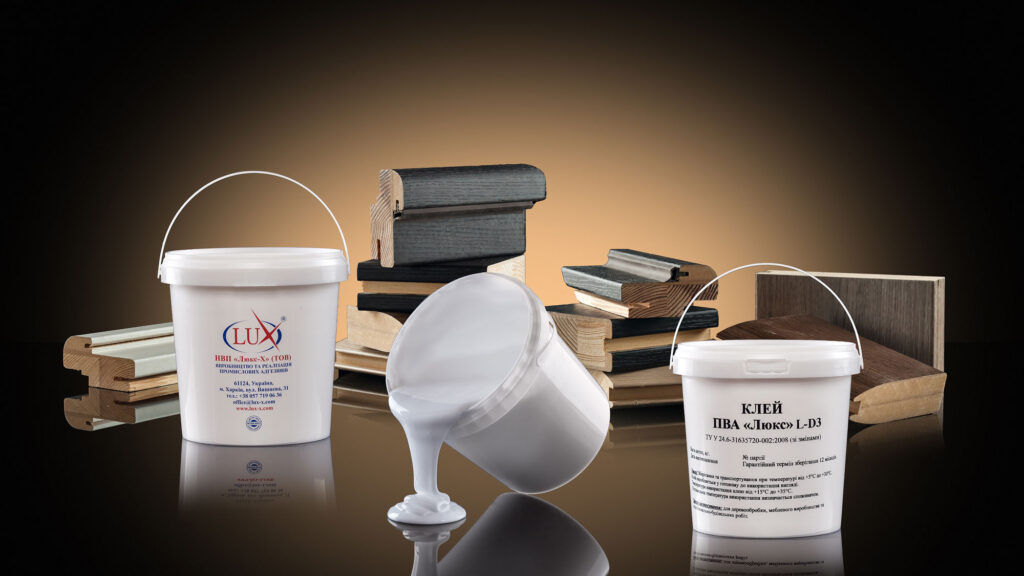
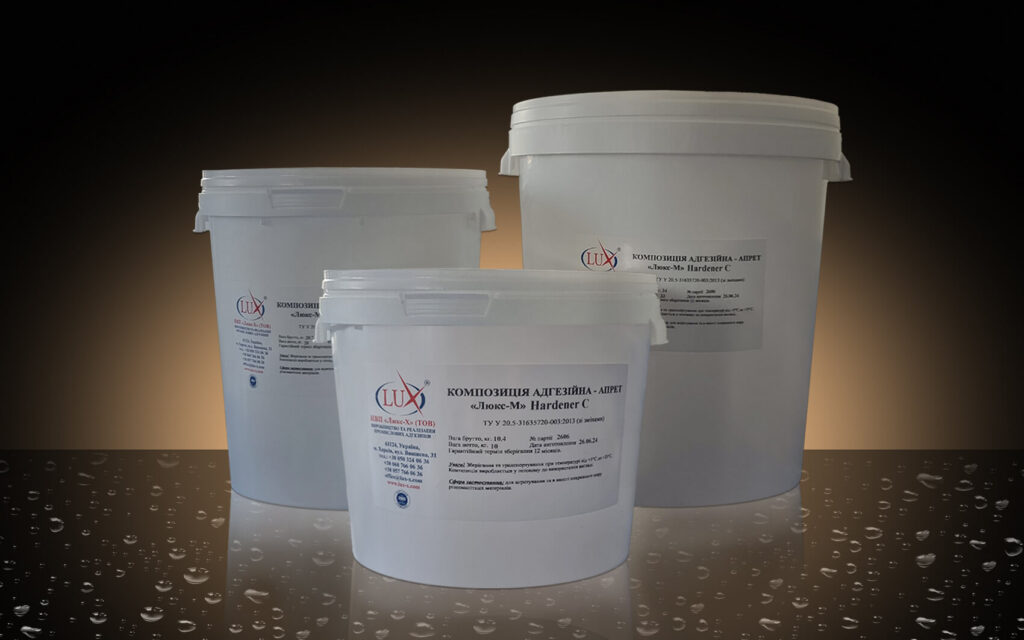
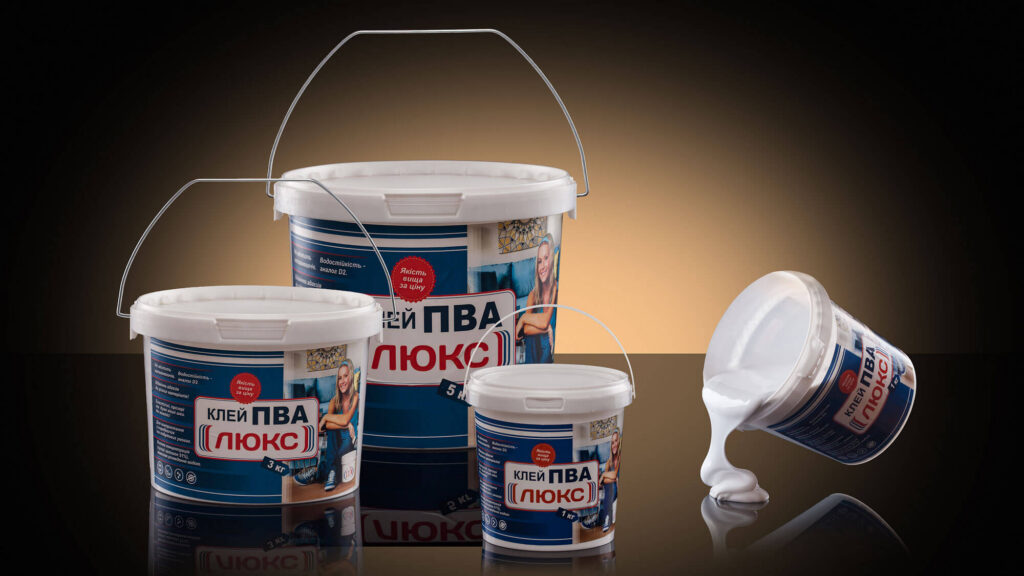
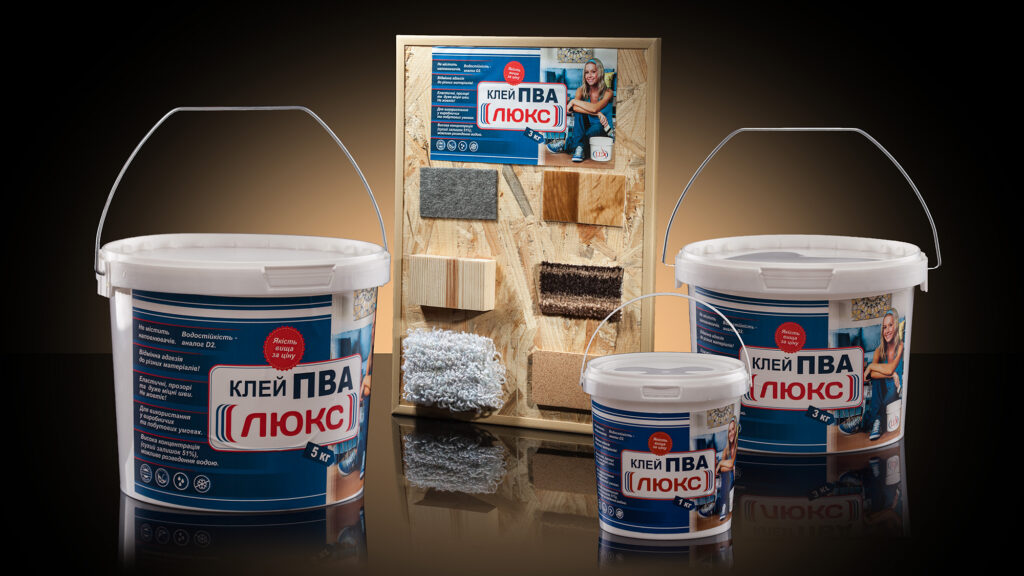
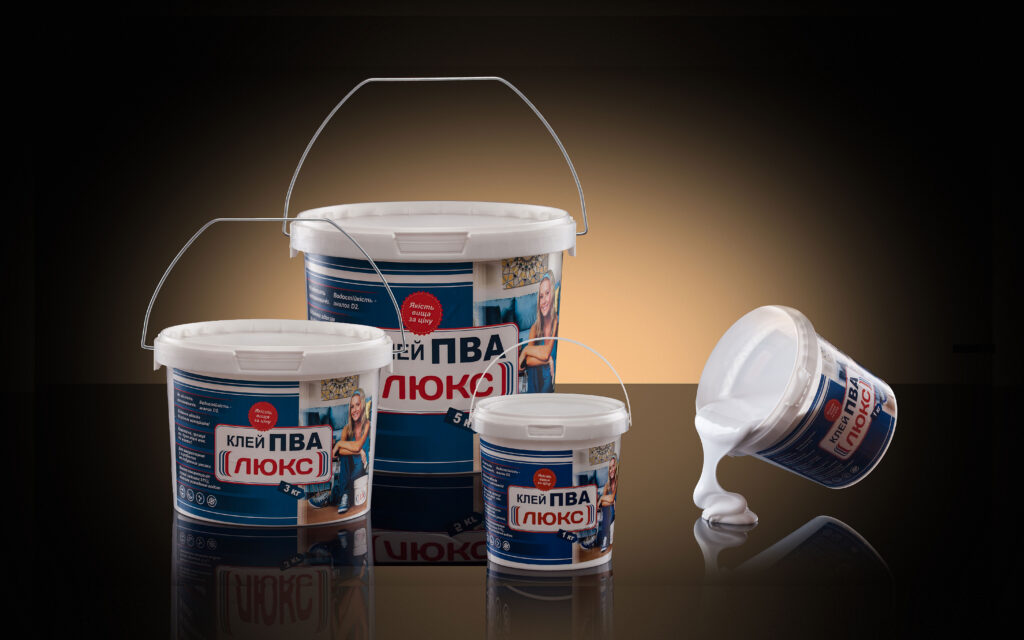
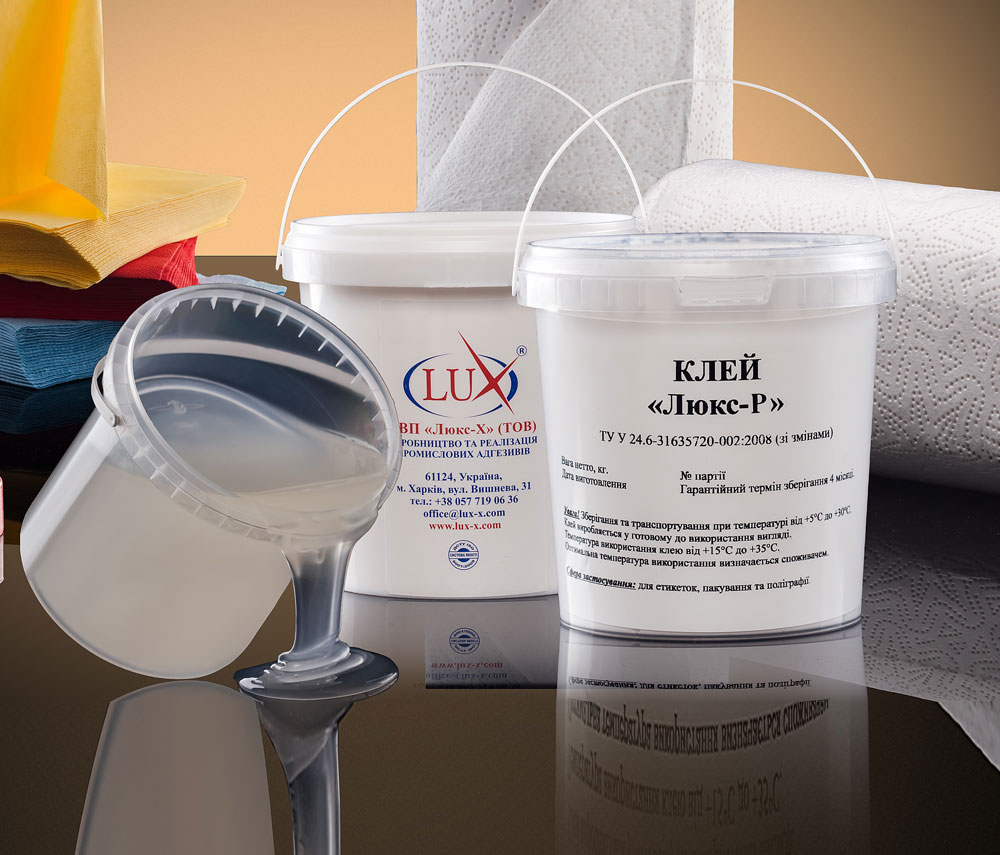
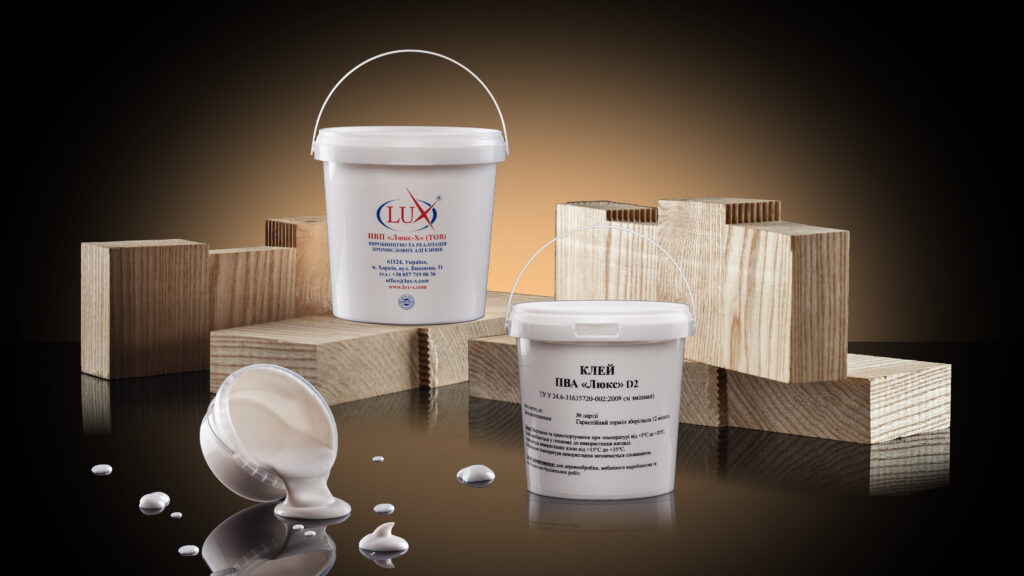
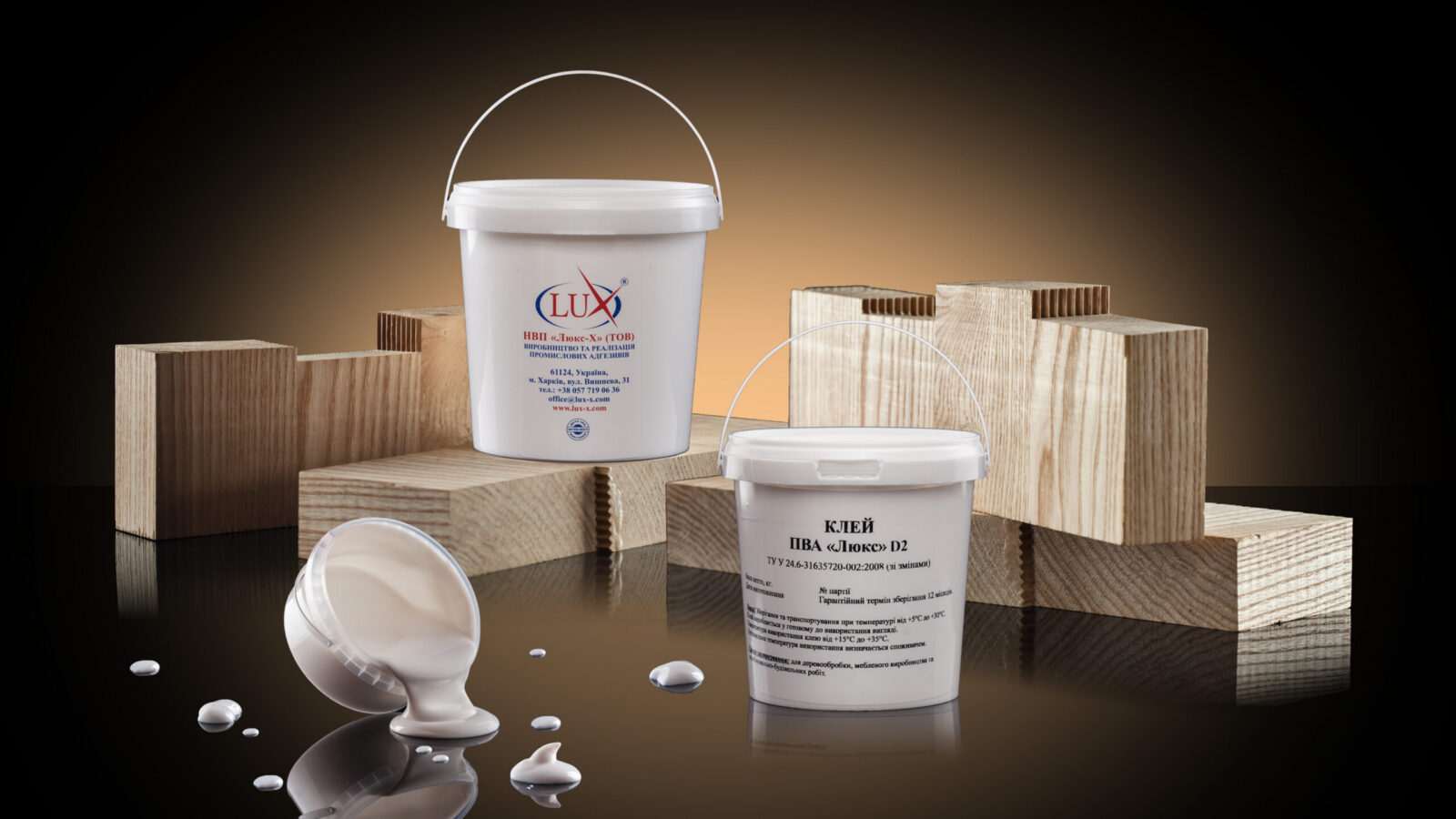
The most common and environmentally friendly adhesive for beams is the polyvinyl acetate one. Lux-X LLC has developed a new kind of PVAc adhesive for wood with an enhanced waterproofness class D4. Lux D4 PVAc is a single-component adhesive based on modified polyvinyl acetate dispersion, polymerisation accelerators, hardeners, and stabilising and preserving agents. The adhesive corresponds to the enhanced waterproofness class according to DSTU BV.2.6-170:2011 (analog of D4).

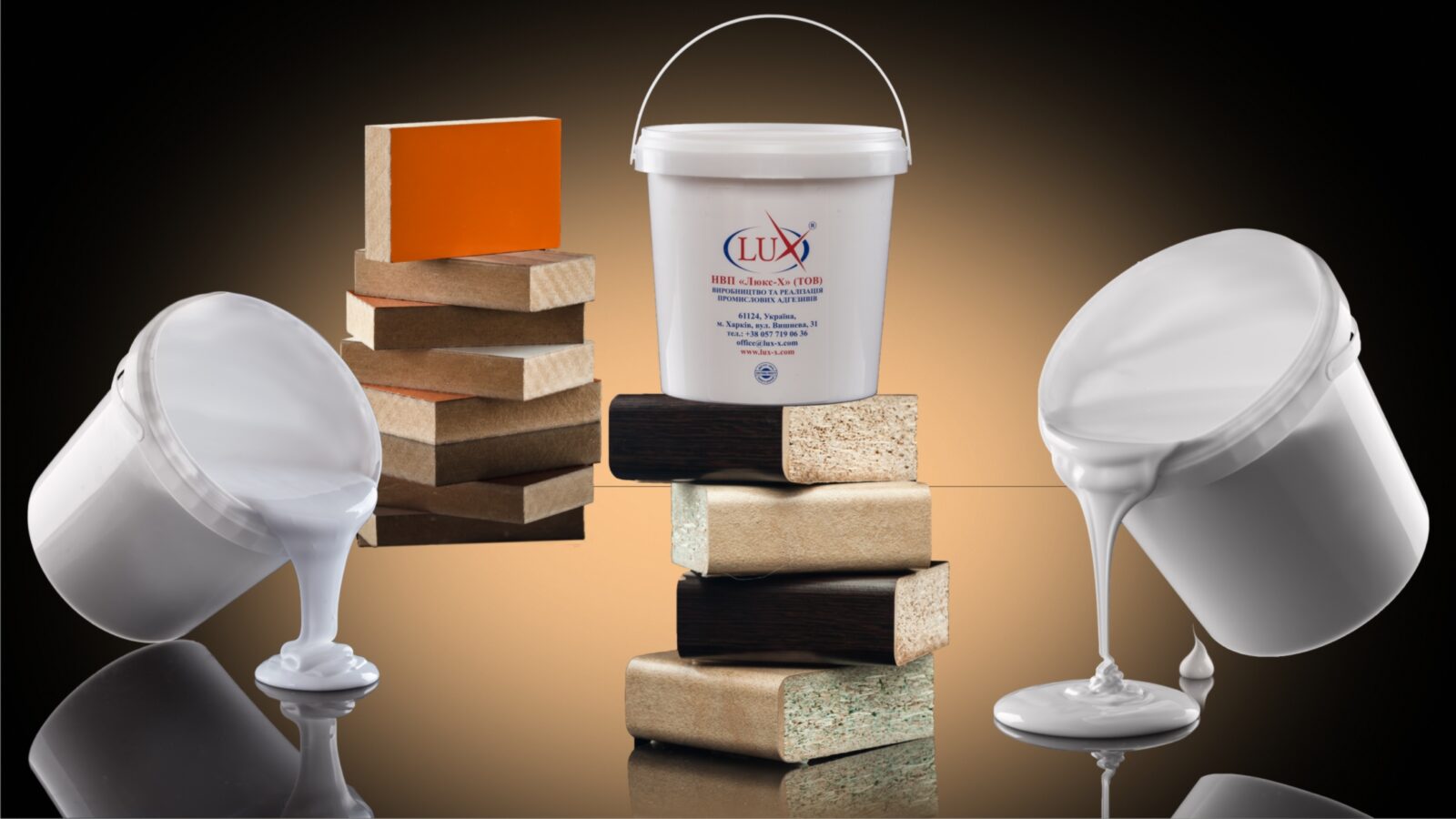
Lux D4 PVAc adhesive is used for gluing interior wooden surfaces subjected to frequent and long-term action of running water or condensate. Besides, the adhesive is intended for gluing outdoor structures exposed to the elements: window frames, doors, wooden houses, garden furniture, etc.
Application:
- Woodworking and gluing hardwood and softwood.
- In the furniture industry for gluing wooden elements.
- Gluing solid timber when making carpentry and construction articles, parquet boards, etc.
- Gluing laminated coverings and plywood.
Advantages of Lux D4 PVAc adhesive:
- Non-toxic. The adhesive joint is resistant to the effect of environmental factors.
- Sets fast and ensures a strong bond in high humidity conditions.
- Forms a durable and reliable adhesive joint. High adhesion with wooden surfaces and other materials.
- Enhanced waterproofness. Resistant to adverse ambient conditions.
- Produced of environmentally safe components.
- Applied by hand or with machines.
- Used for the flow line machine method of application with rollers or nozzles, as well as for application by hand.
- Intended for use in hot and cold pressing machines.
Purchase Lux PVAc adhesive for beams in Ukraine
You can order carpentry adhesives for beams wholesale from the producer – Lux-X LLC. Our specialists will select an adhesive suitable for you and consult on the price. With orders in excess of 30 kg, deliver is free-of-charge across Ukraine.
You can receive consultation and order an adhesive by telephone +38 (057) 766 06 36 or place an order on the company website lux-x.com