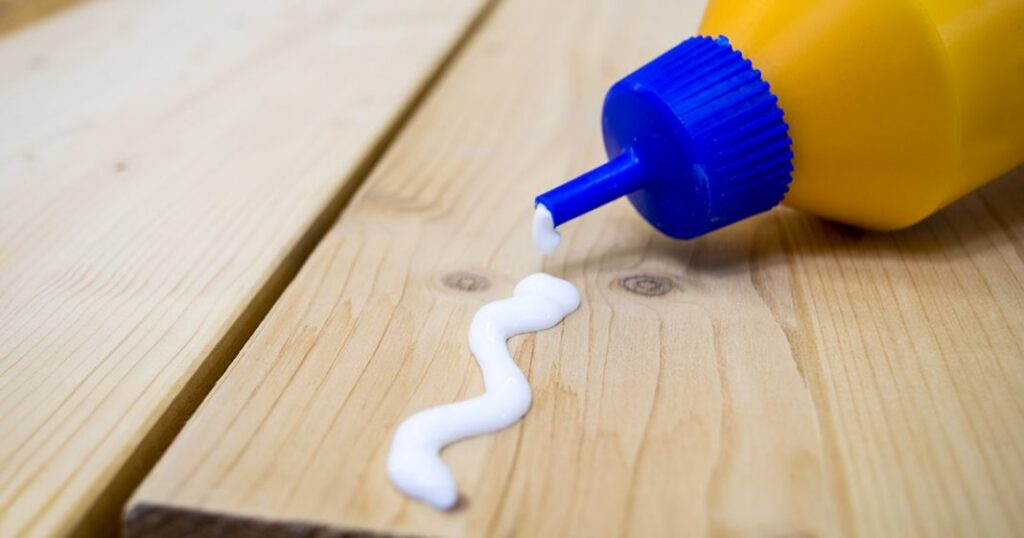
Glue for repairing furniture

Glue for repairing furniture

Furniture is an essential complement to an interior, though with time it can lose its functional and aesthetic properties. Buying furniture is costly and not everyone can afford to buy a new piece of furniture. To save on money, damaged furniture can be repaired, including with the use of glue. Besides, glue for furniture is a requisite thing during furniture making. Therefore, this information will be useful for manufacturers and consumers alike.

Which glues are used for repairing furniture?

All glues for wood and furniture, depending on the source material, are organic of animal or plant origin and inorganic, based on synthetic polymers.

The most common glues for furniture are as follows:

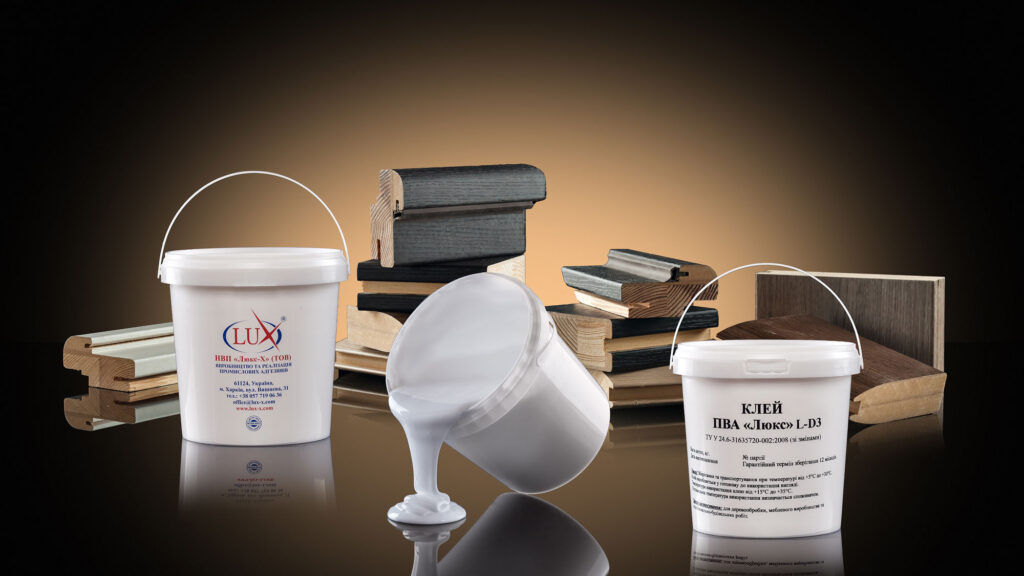
  • Carpentry water-based glues with fast setting on a surface and strong bonding of parts to each other, for instance, PVAc dispersion or polyvinyl acetate adhesive. PVAC is excellent for repairing wooden furniture. Polyvinyl acetate glues chipboard, fibreboard, MDF, plywood and other materials, and it is moisture resistant.
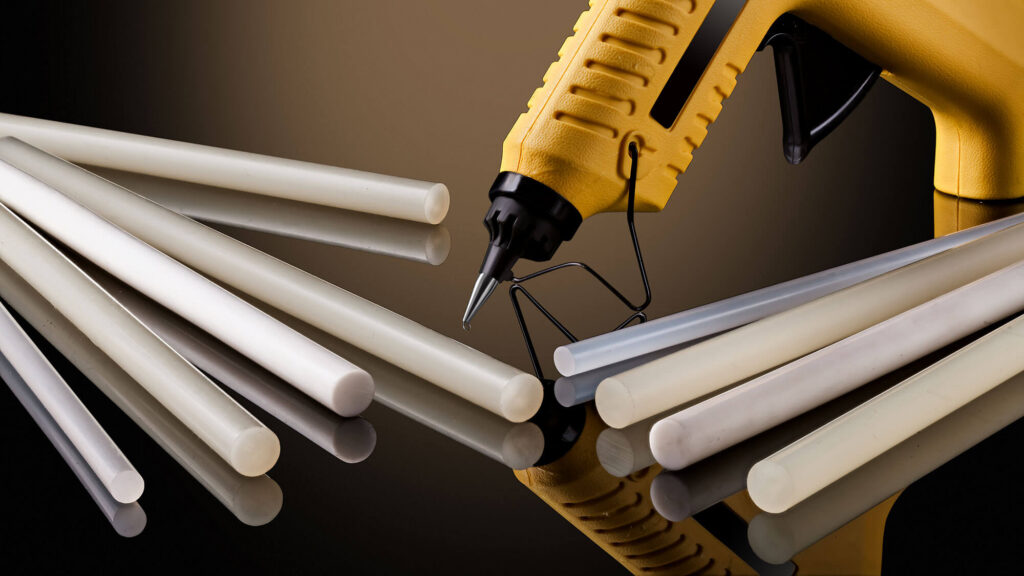
  • Hot or thermoplastic adhesives are produced based on ethylene vinyl acetate or polyolefin. These adhesives need a high temperature for activating their bonding properties. Hot glue is used for applying edge bands, veneer sheets or a film onto parts used for making furniture.

  • Contact adhesives reliably glue plastic coatings to table tops or other surfaces and ensure strong bonding of wooden veneer. Contact adhesive for gluing plastic is produced based on polychloroprene, therefore a point to keep in mind is that this adhesive is toxic and it not recommended for use indoors without industrial exhaust ventilation.
  • Epoxy adhesives are a multipurpose means for repairing furniture. The glue advantages are condensate resistance, strength and durability, and a drawback is adhesive toxicity. Epoxy adhesives are of the following kinds: single-component ones including plasticisers and solvents, and two-component ones sold in two vessels, one contains the epoxy resin as a paste, and the other contains a hardener. Prior to being used, both substances are mixed and can bond virtually any material.

When choosing a glue for repairing furniture, the following must be considered:

  • The article materials.
  • Absence of toxic substances in the adhesive composition.
  • Glue thickness that affects the adhesive application method and the setting rate.
  • A point to keep in mind is that the glue should match the furniture tone colour. It is best to choose a glue with a suitable colour or a transparent glue, which after drying becomes indiscernible.

Which glue is best for repairing wooden furniture?

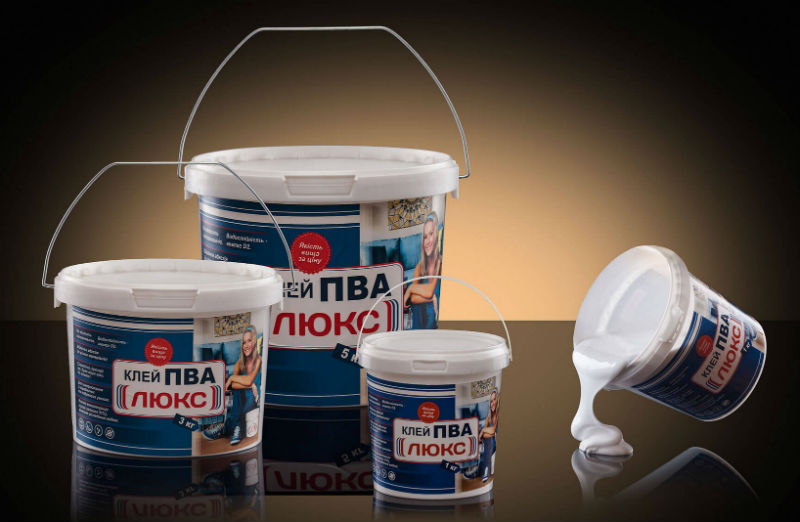
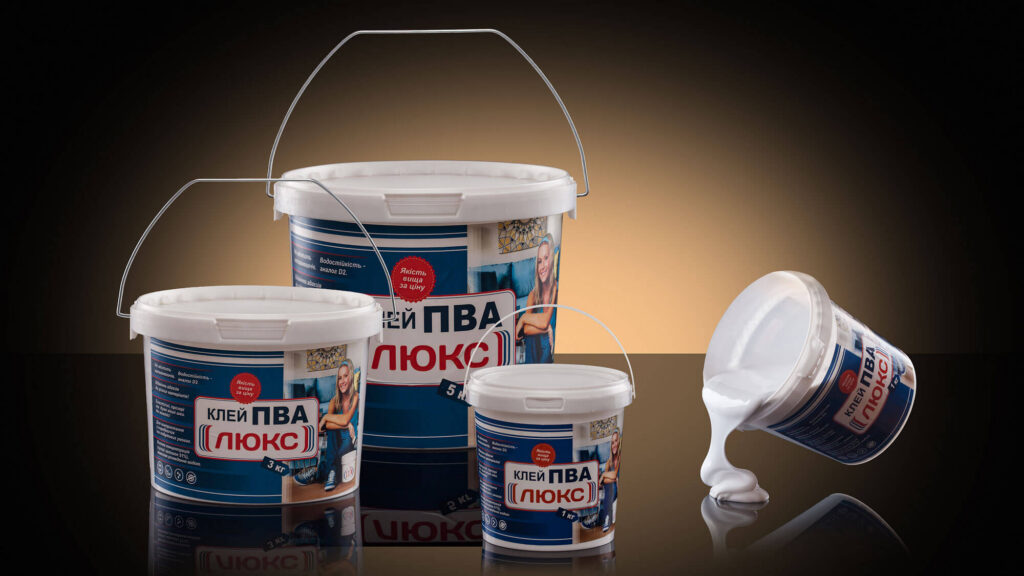
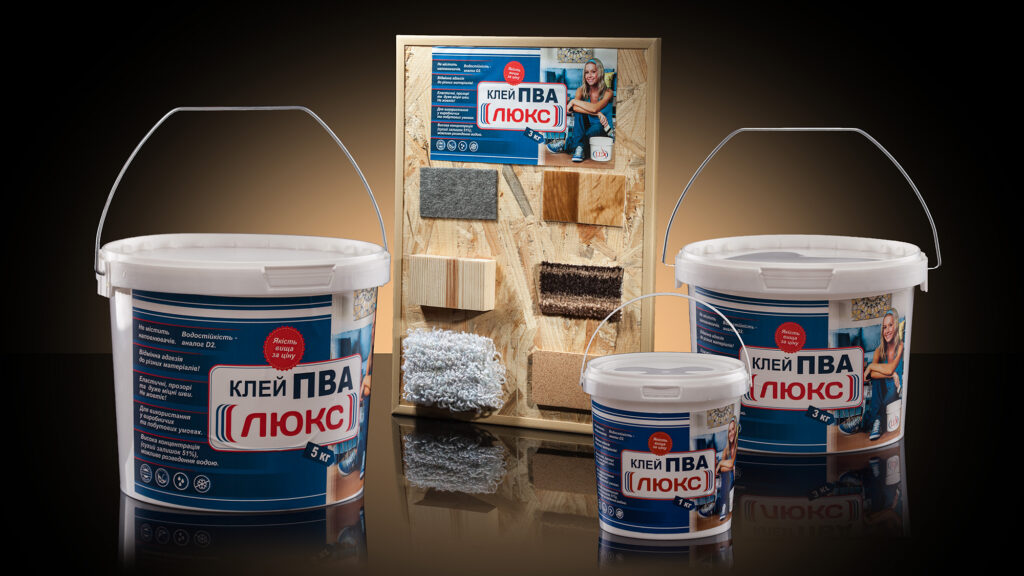
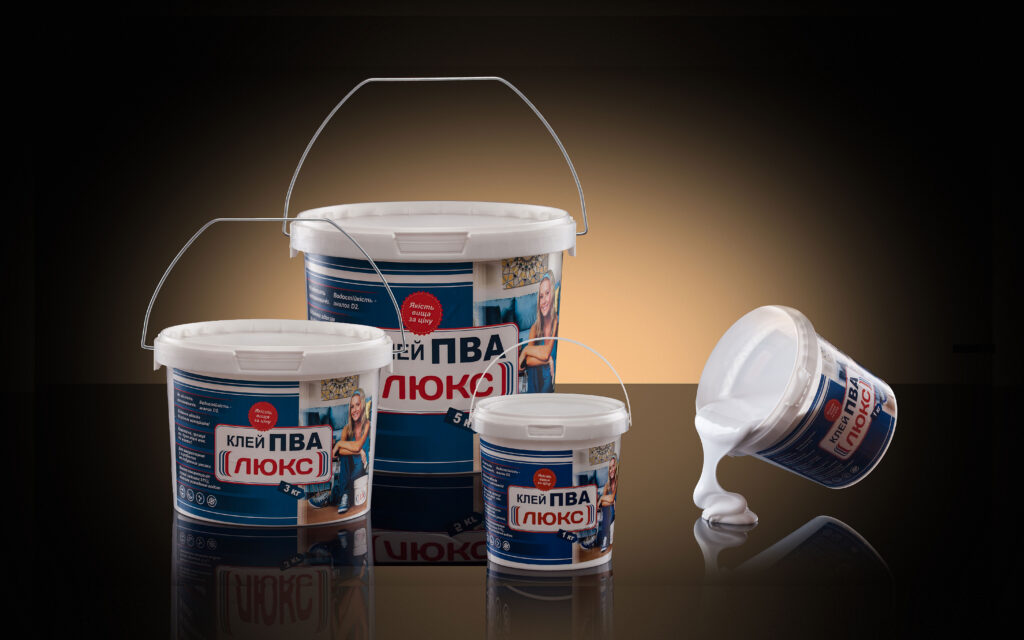
To glue wooden furniture, it is best to choose PVAc Lux glue. Polyvinyl acetate glue has not only superior adhesion properties, but also several other additional characteristics:

  • Dries fast.
  • Resistance to temperature changes and UV radiation.
  • Having dried, the glue leaves no spots on the surface.
  • Does not turn yellow with time.
  • The moisture resistance level is D2-D3.

PVAc can be used not only for repairing a chair at home, but also to close cracks in a wooden floor. To do this, make a sealant based on PVAc glue by mixing fine wooden chips with the PVAC glue, and the sealant material is ready to be used. Fill the cracks with the paste and level the surface with a palette knife. Leave the repaired place for 24 hours until the glue dries completely. Read more about PVAc Lux glues here.

Which glue is used for repairing cabinet furniture?

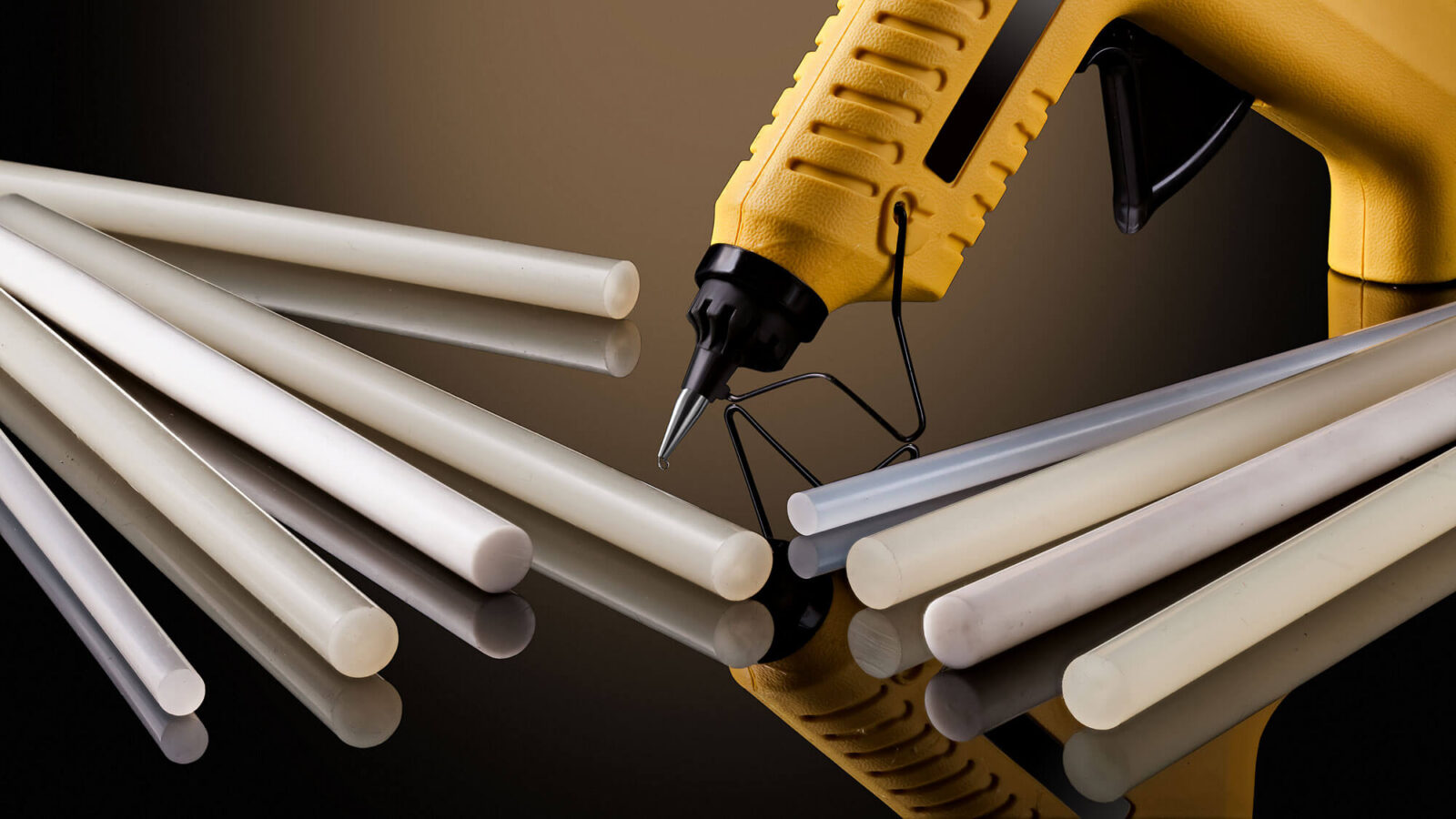
Furniture can be renovated using a hot melt glue gun and EVA-based sticks. This can solve the problem of a loose edge band, loose veneer or renovating decorative articles.

With this in view, it is best to use a hot glue or hot melt glue sticks by BeardowAdams TM (Great Britain) represented in Ukraine by Lux-X LLC. When working with hot melt glue sticks, a special glue gun is used. How to work with a glue gun is described here.

To glue an edge band accurately, here are several life hacks:

  • Prepare the surface. Before gluing the edge band, sandpaper the surface.
  • Prepare the hot glue. Insert the glue sticks into the gun and heat them to a flow ability state.
  • Apply the hot glue onto the edge band and place the material onto the surface to be glued.
  • Make a pass with a roller on the glued material to flatten the edge band and prevent any bulging.

Where to buy glue for repairing furniture?

Among the market variety of gluing compositions for wood and furniture, it is essential to choose a glue that ensures strong glue bonding at an affordable price.

Consult Lux-X LLC experts on the issue of choosing a reliable adhesive for quality gluing of furniture. Lux-X LLC managers provide complete information and technical support during the entire period of collaboration.

Call a manager for advice and order a glue by telephone (057) 766-06-36 or by clicking on the Call-back button on our website.

Yana Shyika

Author of the article:

Yana Shyika

<p>Chief Chemist of the <span class="text-no-wrap">SPE «LUX-X» (LLC)</span></p>

Number of articles: 21

Articles you might like

Vinyl and non-woven wallpaper: application rules of glue

Vinyl and non-woven wallpaper: application rules of glue

A big number of diverse materials for interior and exterior decoration of premises appear on the shelves of building centers every year, meanwhile, an assortment of construction materials for repair work has been rapidly increasing.

Read article
How to use a hot glue gun

How to use a hot glue gun

The hot glue gun is a tool used for gluing parts with the help of hot melt glue sticks. The hand-held hot glue gun softens the glue, doses it and applies onto a surface. Such a tool is simple and convenient to use.
Read article
Storing «Lux» adhesives in winter time

Storing «Lux» adhesives in winter time

Dear customers, Scientific and production enterprise “Lux-X” LLC, the largest producer and supplier of industrial adhesives in Ukraine, would like you to pay attention to storage, transportation, handling, application conditions in cold weather. In winter time dispersion adhesives can be delivered only by specially equipped transport, that's why we are asking you to place the orders for shipment of adhesives in advance.

Read article
Types of wood glue. Principles of the right choice

Types of wood glue. Principles of the right choice

Not only ordinary people but professionals often arise a question: which wood glue is best suited for efficient bonding of substrates? To find out what types of glue with their basic characteristics and properties exist, we have prepared this article.

Read article
Glue Sticks: Types, Applications, and Selection Tips

Glue Sticks: Types, Applications, and Selection Tips

Adhesive rods are used in many industries as part of the process of manufacturing and assembling products. In addition, rods are used in everyday life. In decorative arts there is nothing more universal than gluing with a hot glue gun.

Read article
Polyvinyl acetate emulsion: application areas

Polyvinyl acetate emulsion: application areas

PVAc dispersion is polymerized vinyl acetate in water. The widely used PVAc adhesive is produced based on polyvinyl acetate dispersion, plasticizers and other additives. Often PVAc dispersion is called a polyvinyl acetate emulsion.

Read article
Packaging Trends in the Brewery Industry

Packaging Trends in the Brewery Industry

The latest packaging trends for breweries filling glass bottles emphasize sustainability, innovation, and efficiency while maintaining product freshness and enhancing visual appeal.

Read article
How to properly store, apply and dispose of industrial adhesives?

How to properly store, apply and dispose of industrial adhesives?

We are frequently asked about the shelf life of our adhesives, since any raw material has its own use and storage warranty period. Today we will tell you about the recommended storage duration, rules of transportation and disposal of our products: synthetic, semi-synthetic, natural dispersion adhesives, PVAc and hot-melt adhesives. 

Read article
Adhesion and possible problems

Adhesion and possible problems

When bonding any material, regardless of the type of adhesive, the result is important, i.e. the strength of the adhesive line, its resistance to various external influences and its durability. This is due to the adhesive property.

Read article
Concrete impregnation agents: their definition, types and purpose

Concrete impregnation agents: their definition, types and purpose

Concrete is one of the most durable construction materials, which is why it is used to construct military and civilian structures, including shelters, industrial, commercial, administrative buildings, infrastructure, warehouses and residential buildings.

Read article
How to dilute PVAc adhesives: tips to restore their consistency

How to dilute PVAc adhesives: tips to restore their consistency

PVAс glue is considered to be the most famous adhesive for use in everyday life. Schoolchildren and their parents are familiar with PVAс glue mixtures as the best assistant for crafts made of paper, wood and cardboard.

Read article
PVAC adhesive: an all-purpose glue and why is it still popular?

PVAC adhesive: an all-purpose glue and why is it still popular?

PVAC adhesive is one of the best-known and widely used adhesives in the world. Two chemists invented PVAC at the same time: a German and a Korean scientist who worked on the future product separately and in different laboratories.

Read article
What kind of adhesive to use for gluing fabrics?

What kind of adhesive to use for gluing fabrics?

The demand for textile industry products is increasing from year to year. In this skilled trade, it is essential that the products be neat, have an aesthetic appearance, and hold their shape and color after each washing. Hence, it is difficult to do without an adhesive in textile production because not all materials can be joined using a thread and needle.

Read article
Concrete Impregnating Agent: A Guarantee of Reliability and Resistance to Moisture of Civil and Military Structures

Concrete Impregnating Agent: A Guarantee of Reliability and Resistance to Moisture of Civil and Military Structures

Nowadays, civil and military construction cannot do without the building of various defensive structures and fortifications. Their main purpose is to ensure the safety of people and objects, to guarantee the functioning of infrastructure even in extreme conditions, while maintaining its comfortable conditions. That is why concrete is the most important material in civil and military construction.

Read article
PVAcglue’s drying rate for various surfaces

PVAcglue’s drying rate for various surfaces

One may wonder, what is the drying time of PVAc glue? The drying time hinges on the quality of glue and the materials the product is made of. This article will be helpful in finding out the drying time of PVAc glue on various surfaces.

Read article
What is used to glue paper and cardboard?

What is used to glue paper and cardboard?

Paper and cardboard are the most popular materials used in making cartons, packets, bags and other containers. An advantage of a paper package is its neat appearance and ecological safety.

Read article
Adhesives used in the production of paper towels and toilet paper

Adhesives used in the production of paper towels and toilet paper

When you think of products that are manufactured with the help of adhesives, the last thing that will come to your mind will be their use in the production of toilet paper, paper napkins or towels. However, adhesives are very important for hygiene products.

Read article
“Lux” brand water-repellent coating for corrugated board manufacturers

“Lux” brand water-repellent coating for corrugated board manufacturers

Scientific and Production Enterprise “Lux-X” (LLC) has presented a new product developed in its own scientific laboratory: The water-repellent coating used in the pulp and paper industry when corrugated board is produced.

Read article
Industrial glue: types, features, composition, application

Industrial glue: types, features, composition, application

In industry, glue began to be massively used with the advent of the first factories. Then adhesives of natural origin were in demand. In the war years, to meet the needs of the army, synthetic adhesives appeared, with which metal, leather, wood, rubber and other materials were bonded.

Read article
Merry Christmas and Happy New Year 2025 !

Merry Christmas and Happy New Year 2025 !

Dear partners and friends! Please accept our sincere congratulations Merry Christmas and Happy New Year 2025!

Read article

Please wait...

We are preparing a reliable adhesive joint.